
Signs a Concrete Driveway Needs Replacing
We are a concrete contractor in Eau Claire whose work is new concrete driveways and full replacements. We do not patch, resurface, lift or level concrete, so if the signs below say your driveway can still be repaired, it belongs with a repair or leveling company.
- Sections that heave, rock or drop
A section that moves has lost even support, which lets it bend, crack and settle. Frost heave takes frost-prone soil, water and freezing temperatures together, and resurfacing does not solve a soil problem.
- Scaling that keeps spreading
Light flaking is cosmetic and may not need repair. Heavy scaling that keeps spreading may be past repair, and a patch will not match the original concrete.
- Spalling that runs deep
Guidance written for pavement says a spall can be patched when no more than the upper third of the slab is damaged and the concrete below is sound. Deeper damage calls for full-depth repair.
- Cracks wider than about a quarter inch
A trade rule of thumb treats narrower cracks as generally not structural and fine to fill as a temporary repair. A crack with one side sitting higher than the other means the slab has moved.
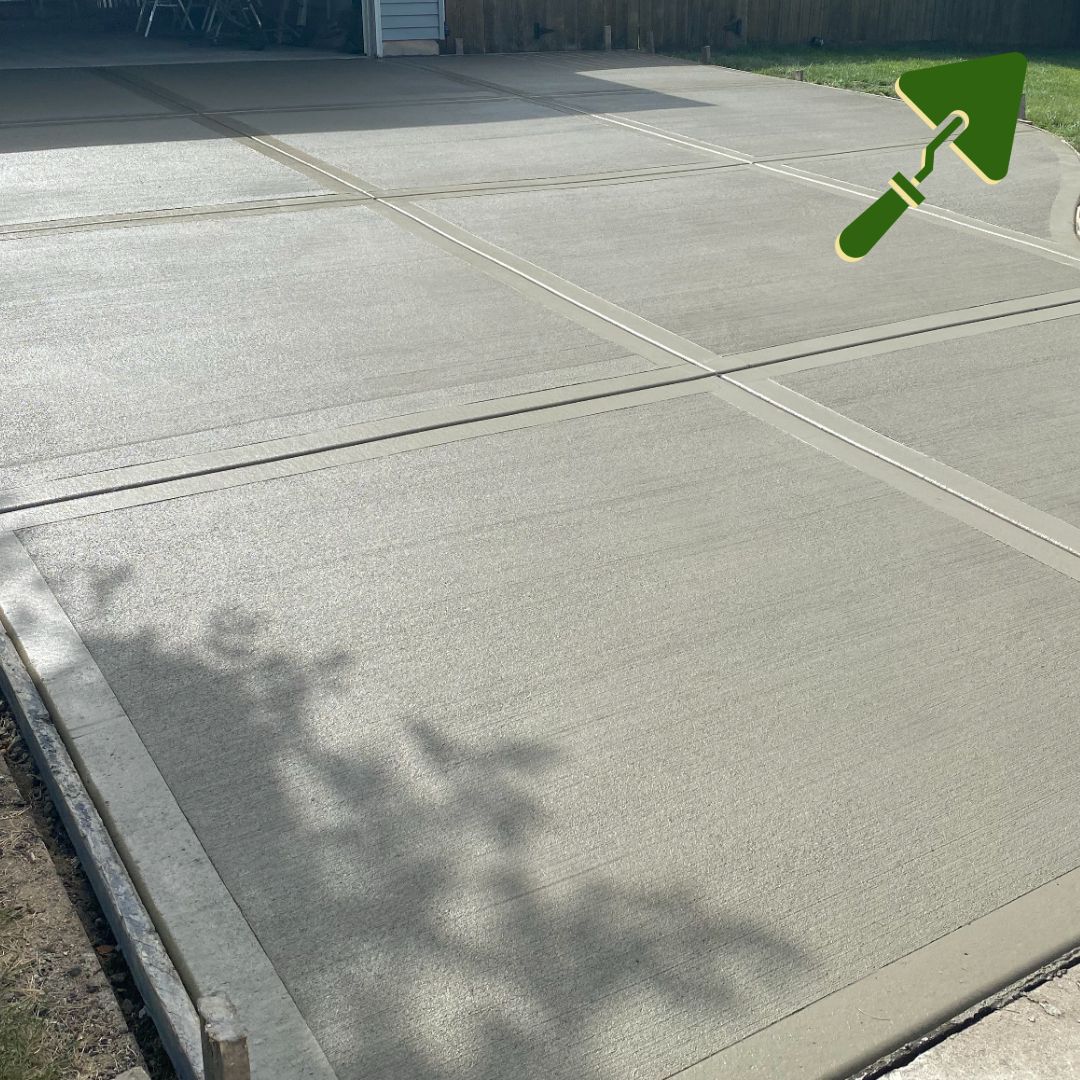
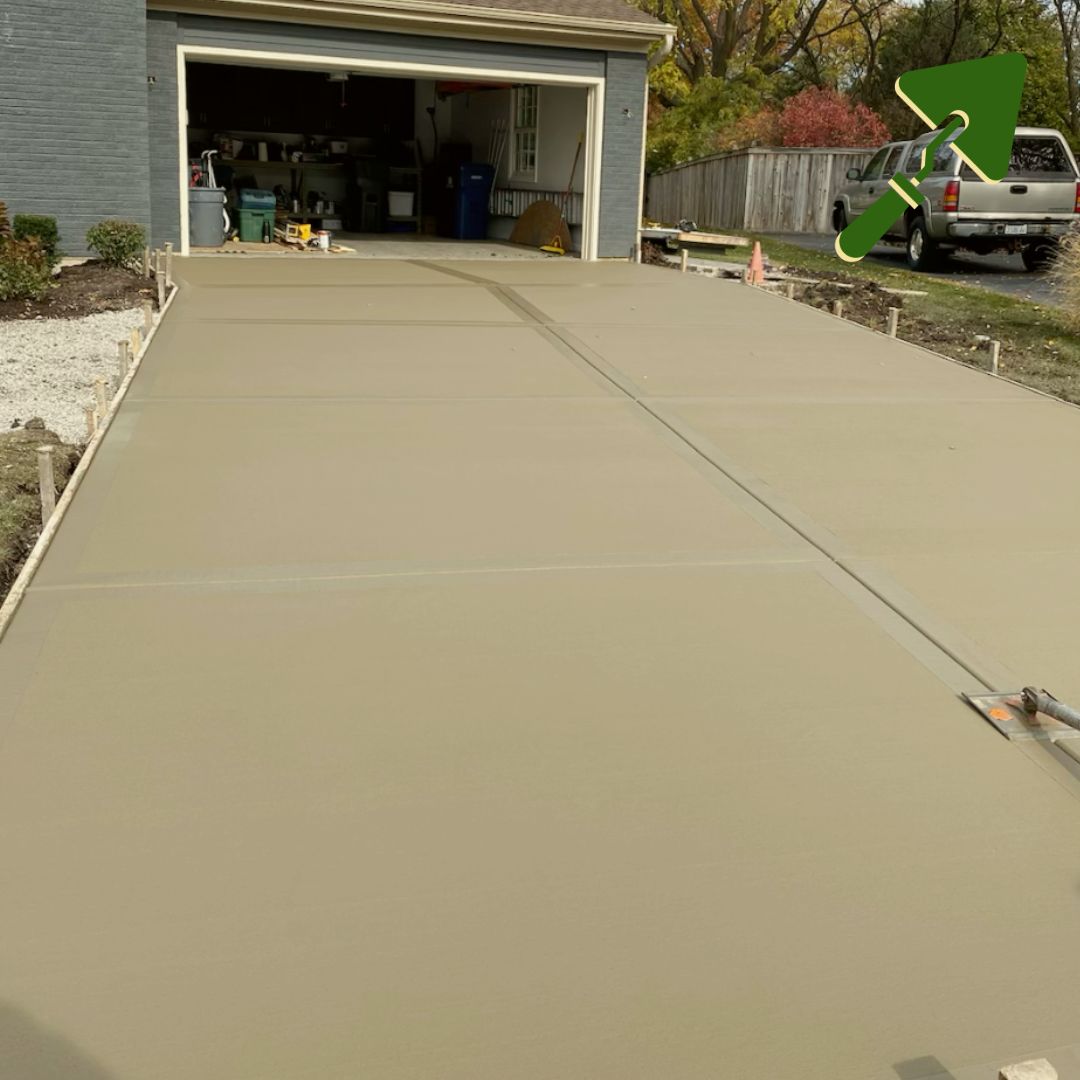
Past that point, we tear out the old slab, rebuild the base, set forms, pour and finish.
What a Concrete Driveway Costs
The figures below are typical ranges for concrete driveways, not a quote. Your own number comes from a written estimate, once we know the size of the driveway, what has to come out, the slope, the drainage and how a truck gets in.
| Work | Published range | Notes |
|---|---|---|
| New broom-finish driveway | $8 to $22 | Thickness, base work and access move a job within it. |
| Driveway replacement with tear-out and haul-off | $10 to $32 | Includes breaking out and hauling off the old slab. |
Typical ranges, not a quote. A written estimate comes after we see the driveway.
What Drives the Price of a Concrete Driveway
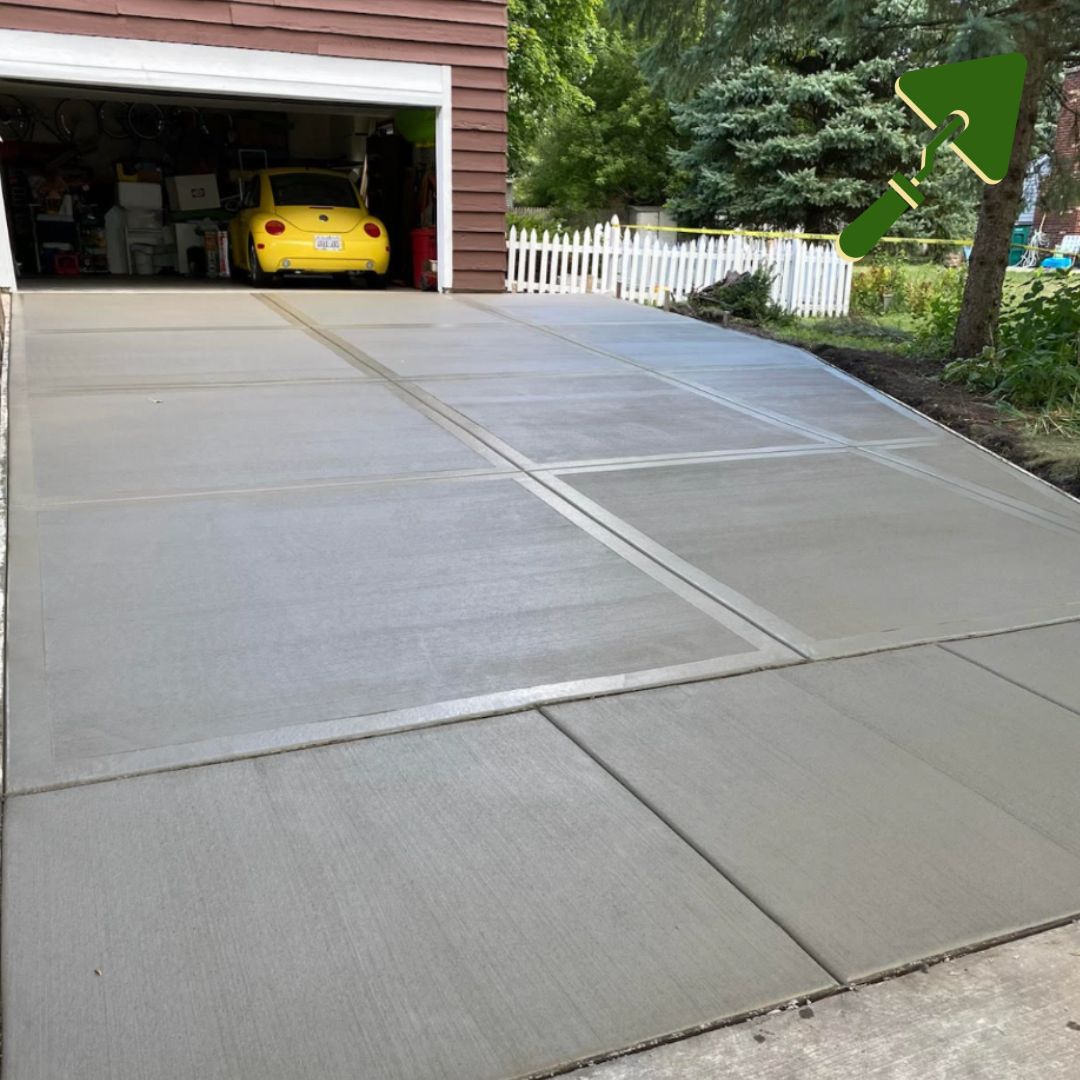
Square footage sets the starting point. What the slab has to carry and what the site needs decide the rest.
- Size
Small jobs usually cost more per square foot, and some contractors apply a flat minimum.
- Thickness
A slab sized for heavier vehicles takes more concrete. The Wisconsin Ready Mixed Concrete Association says going from 4 inches to 5 adds about 20 percent to the concrete cost alone and almost 50 percent to load-carrying capacity.
- Site and base
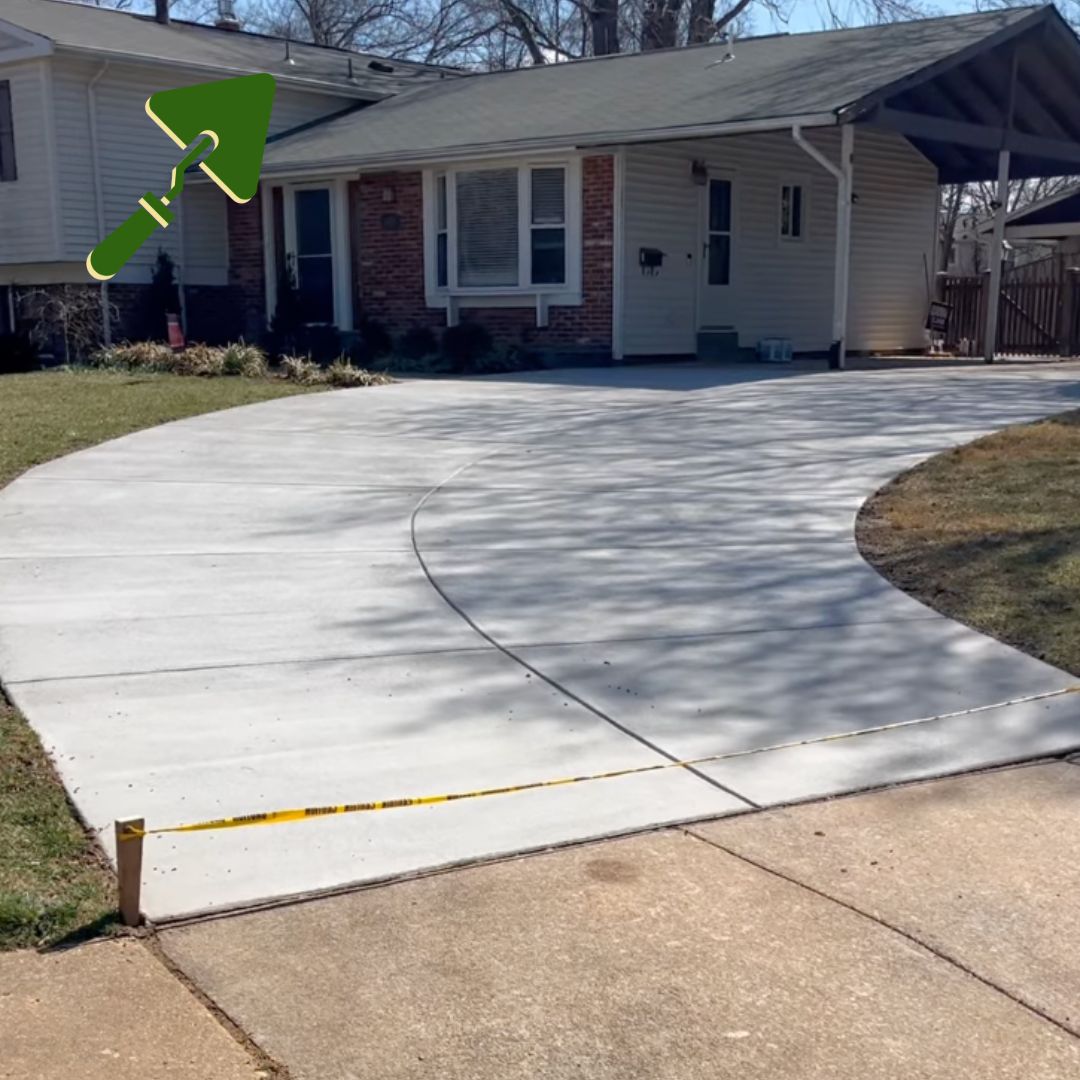
Slope, curves, drainage, grading, subbase and access all show up in a driveway contractor's quote.
- The street end
On an Eau Claire street with curb and gutter, the apron follows the City's standard detail, which shows it 6 inches thick.
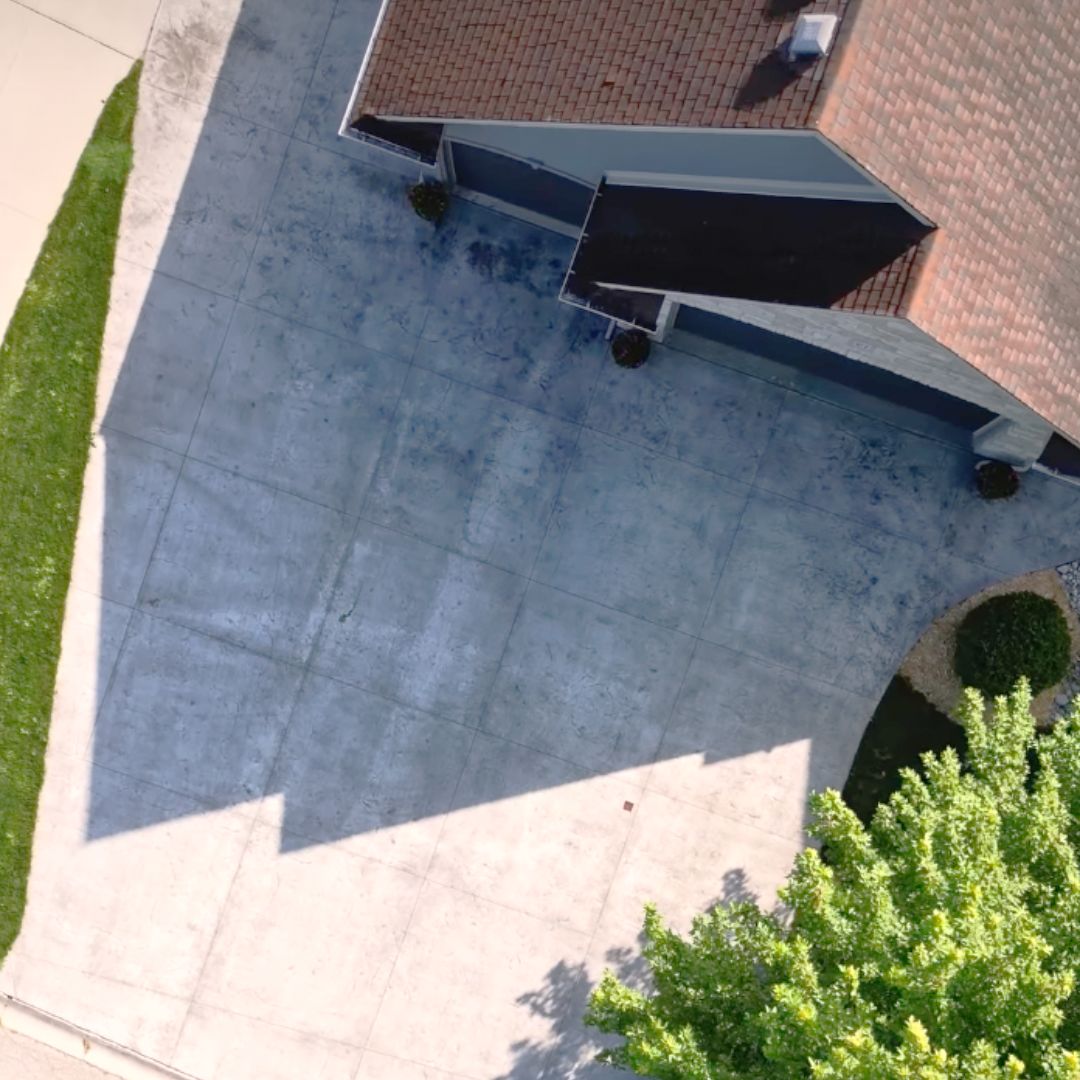
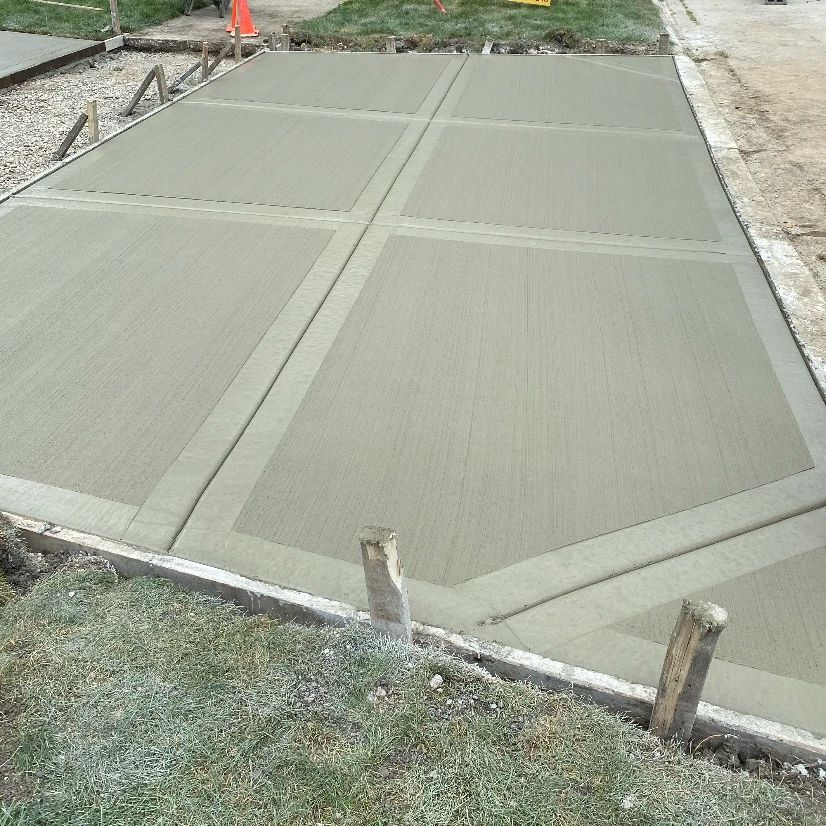
A premium finish adds to the price of a driveway installation: see stamped concrete borders and finishes.
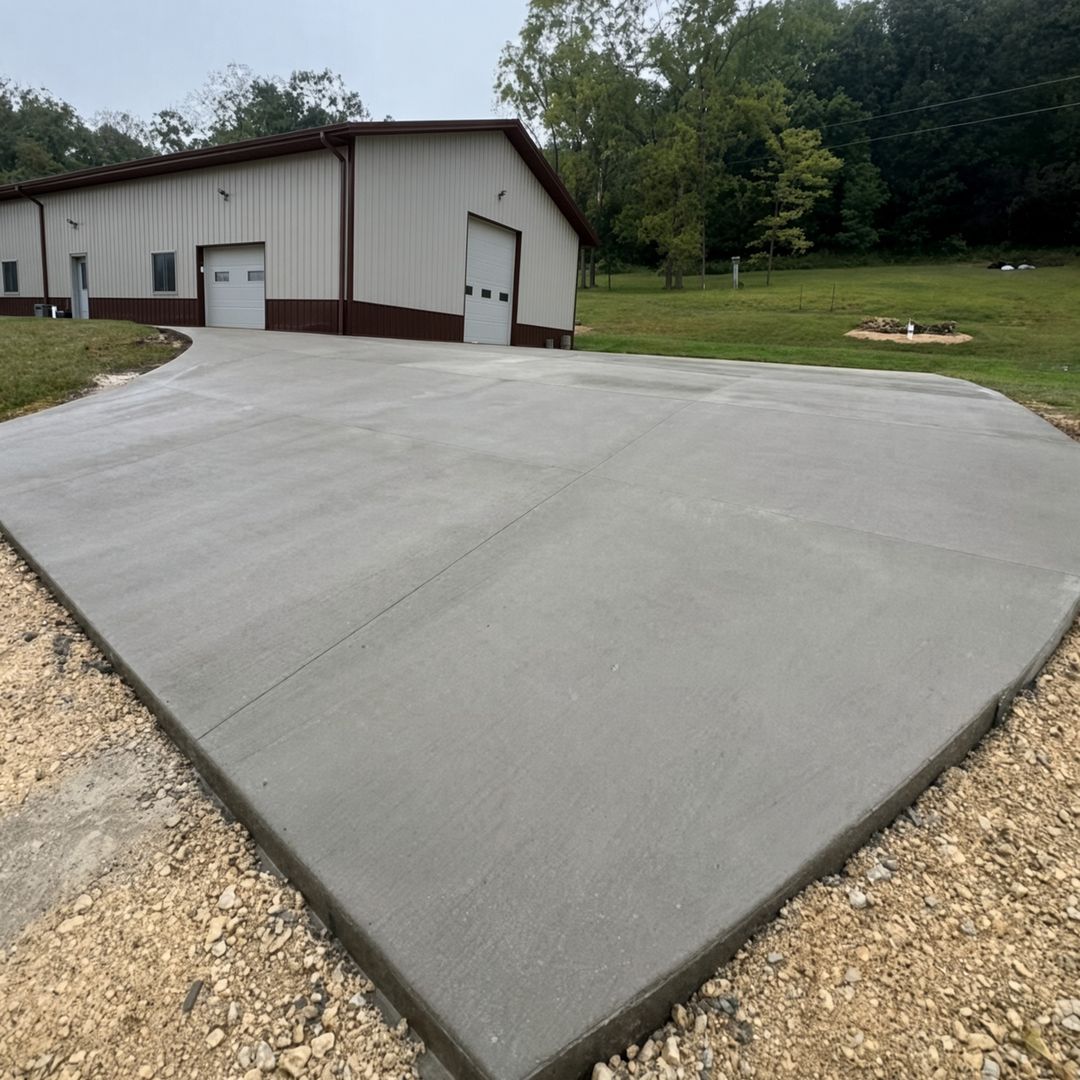
City of Eau Claire Driveway Rules: Width, Approach and Permits
The street end of a city driveway is on public ground. That puts concrete driveways inside the Eau Claire city limits under two sets of rules, split at the property line.
In the Public Right-of-Way: Apron, Approach and Permit
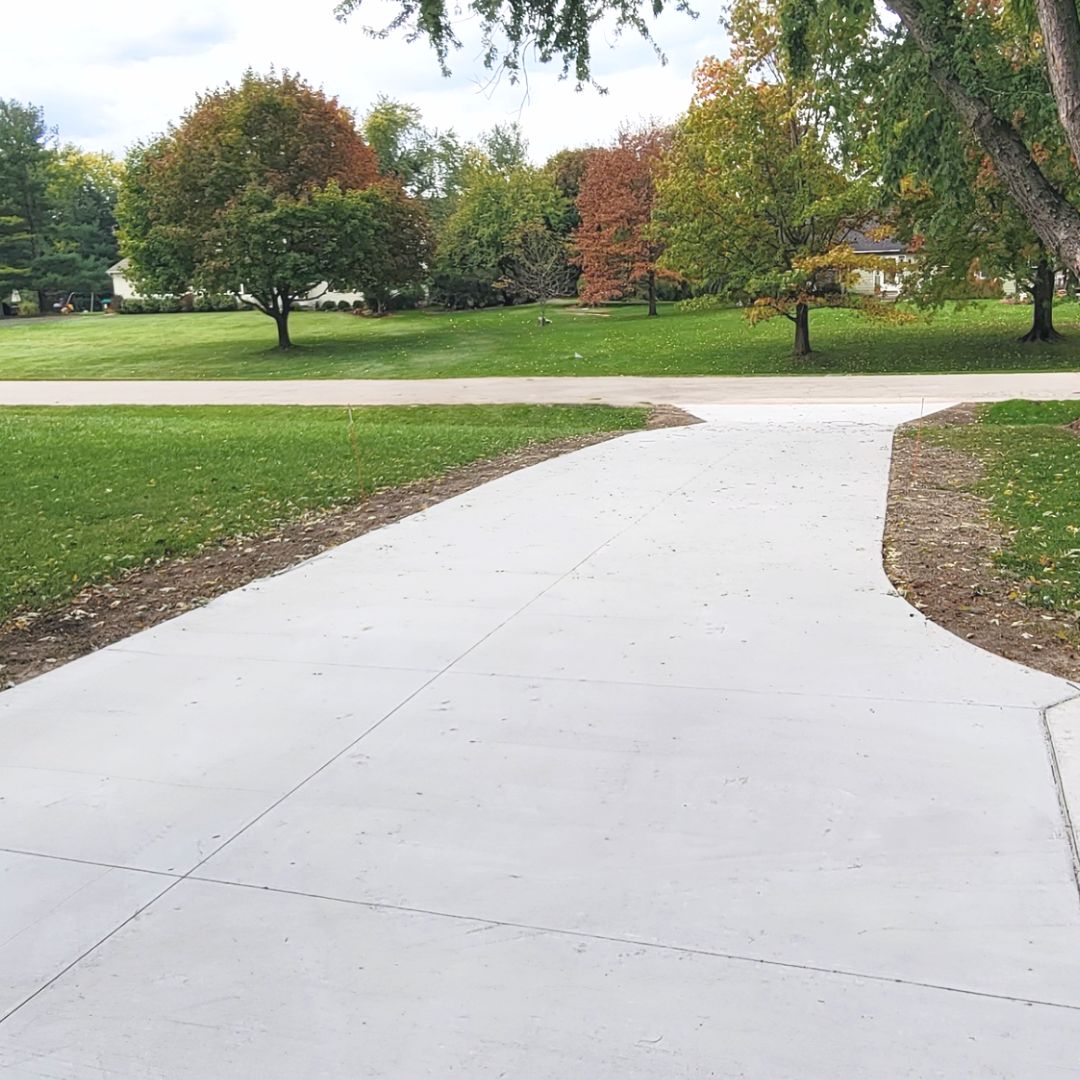
The apron, or drive approach, is the part of the driveway on the street side of your property line, including the sidewalk area. For that crossing, see the public sidewalk and private walkway rules.
Ask about a permit before an apron is torn out. The City’s Engineering office lists a Work in Right-of-Way permit at a $45 base fee plus $4 per day as of 2026. It is not spelled out whether replacing one apron in the same footprint needs it, so call 715-839-4934 and ask.
On Private Property: Width and Number of Driveways
A replacement is the time to fix a layout that never worked, such as a strip too narrow for two cars. Bring that up when we measure. Check the limits first: for new development, the City caps how wide a driveway can be and how many a lot can have (see the notes below). The rules do not say how those caps treat replacing or widening an existing driveway. Call the Planning Division at 715-839-4914 and ask whether a new or widened driveway needs a Development Permit.
On a County Highway
Outside city and village limits, installing or improving a driveway that connects directly to a county highway takes a land access permit from the Eau Claire County Highway Department.
Concrete Driveway Installation: Base, Thickness, Mix and Joints
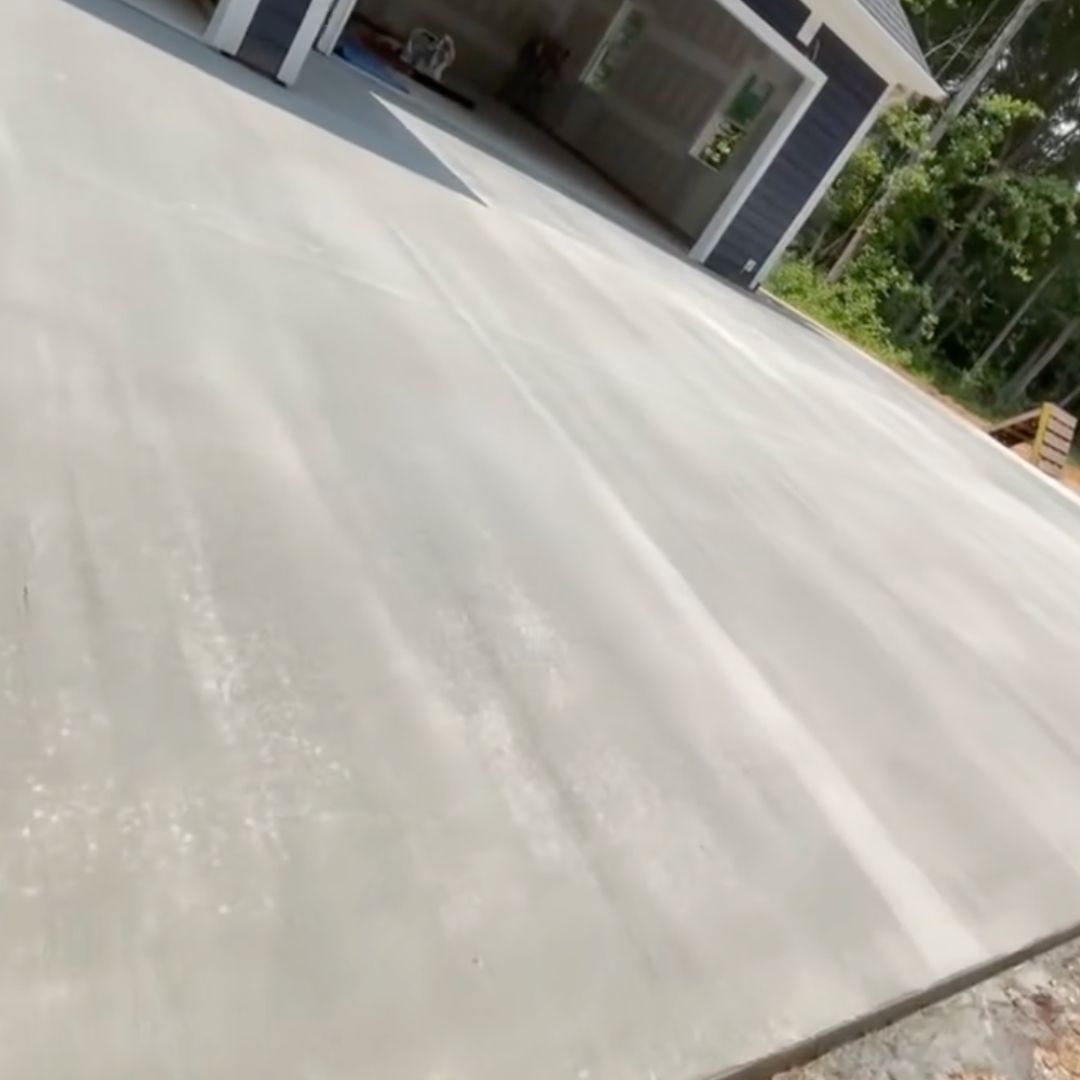
A driveway that lasts through Eau Claire winters gets four things right, and three of them are out of sight once the job is done. The state dwelling code does not cover driveways, so the numbers below are the Wisconsin Ready Mixed Concrete Association’s recommendations for the part on your own lot.
- Base. Concrete is only as steady as what it sits on, so soft spots come out first. The association recommends a compacted granular base, and never placing concrete on frozen or muddy subgrade.
- Thickness. Thickness is sized to the load, so tell us what will drive on it. The recommended minimum is 4 inches, and 5 or more may be necessary where garbage trucks or other heavy vehicles travel.
- Mix. Air entrainment puts tiny bubbles in the concrete that give freezing water room to expand. For exterior flatwork the association calls for air-entrained concrete of at least 4,500 psi. Some national guidance cites 4,000 psi, so ask which mix is being ordered.
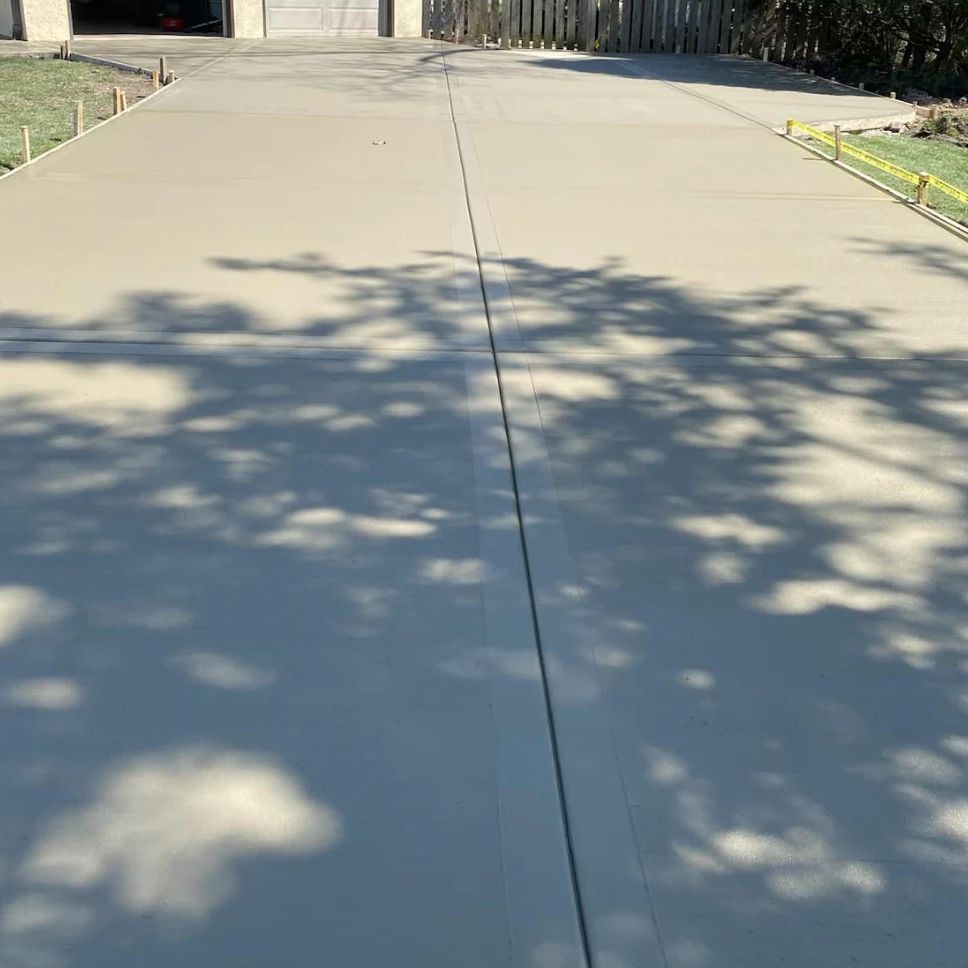
- Joints. Concrete shrinks as it hardens, and control joints are planned cracks that give it a straight line to crack along. The guideline is a cut at least a quarter of the slab thickness deep, with joints 10 feet apart for a 4 inch slab and never more than 15 feet.
Ask any concrete driveway contractor bidding your job about all four, us included. Ask whether they are licensed and insured, too. We are.
Concrete Driveway Replacement, Step by Step, and the Cure Timeline
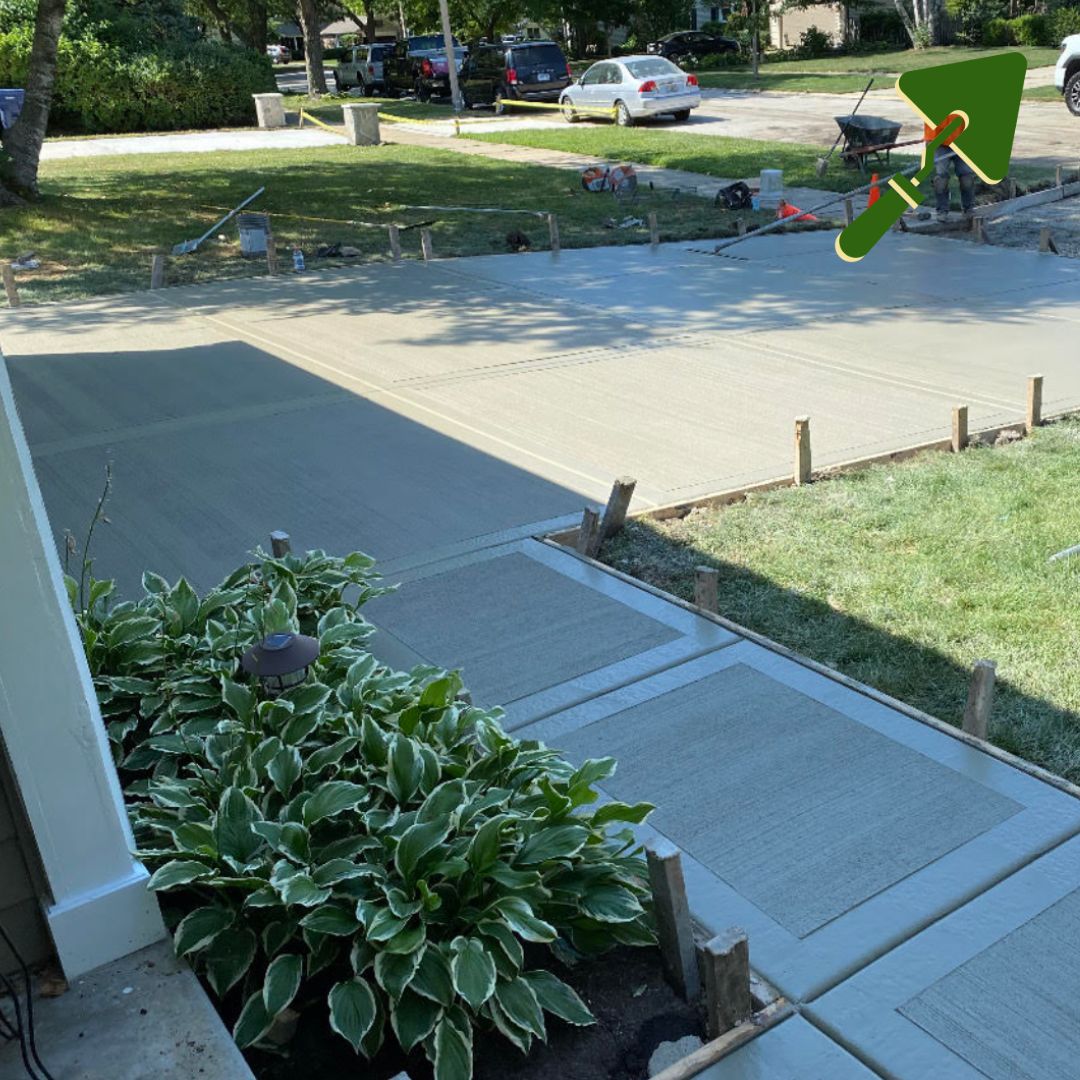
A driveway replacement runs in the same order every time, and a new driveway installation skips only the tear-out. Ask for the schedule with your estimate, because the day count depends on the job and the weather.
- 3 working days ahead Diggers Hotline notice
State law requires at least three working days' notice to Diggers Hotline before planned digging. The service does not mark private lines such as sprinkler systems, so tell us about any you have.
- Before the pour Tear-out, subgrade and forms
We break out the old slab, haul it off and prepare the ground for even support, which matters more than sheer strength. Forms set the edges and the slope that sheds water.
- Pour day Place, finish and joint
The concrete is placed, screeded, bull floated, edged and jointed, then given a broom texture for grip on a plain driveway.
- Day 7 or later Cars back on
Keep passenger vehicles off for at least seven days, longer in cool weather, and plan where the cars will park until then.
- At least 30 days of air drying First sealer possible
The state association says to wait at least that long, and the sealer maker's directions have the last word.
A New Concrete Driveway’s First Winter: Deicers and Sealing
The first winter is the hard one for a new concrete driveway, and winter in Eau Claire starts early.
Deicers make freeze-thaw damage at the surface worse. The first-winter advice from the state and national ready mix associations is the same: no deicers, sand for traction, and never a product containing ammonium sulfate or ammonium nitrate.
Salt also arrives on tires. As of 2026, the City’s snow and ice page says only its Ice Control Routes are salted. Concrete driveways on any other Eau Claire street can still see salt, because vehicles carry salt and brine in from those routes.
After a first sealer, plan on resealing every 2 to 5 years depending on the product, preferably in September.