
Concrete Patio Finishes Compared
The finish on a concrete patio has to be chosen before the pour, because color and texture go in while the concrete is fresh. We settle the finish with you before the concrete is ordered, so ask which of the four below we pour.
| Finish | How it is made | What you see |
|---|---|---|
| Broom | A broom drawn across the surface after floating, edging and jointing. | A broom texture instead of a slick finish. |
| Exposed aggregate | Surface mortar is brushed and washed away as the concrete begins to harden. | The stone in the concrete, showing at the surface. |
| Colored | Integral color is mixed through the whole load. A dry-shake color hardener is worked into the surface and colors only the top layer. | Integral color suits more muted colors. A color hardener gives more vibrant color. |
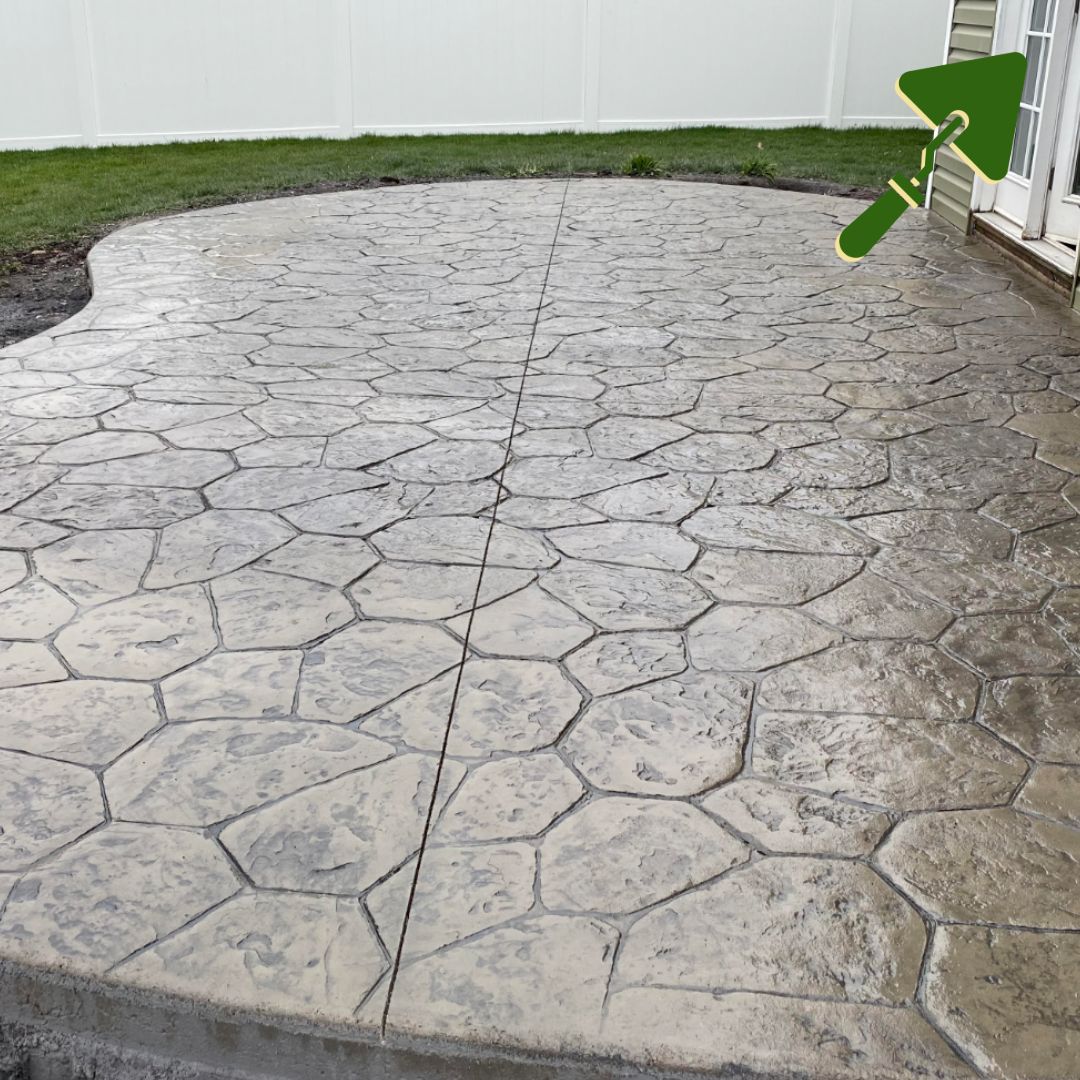
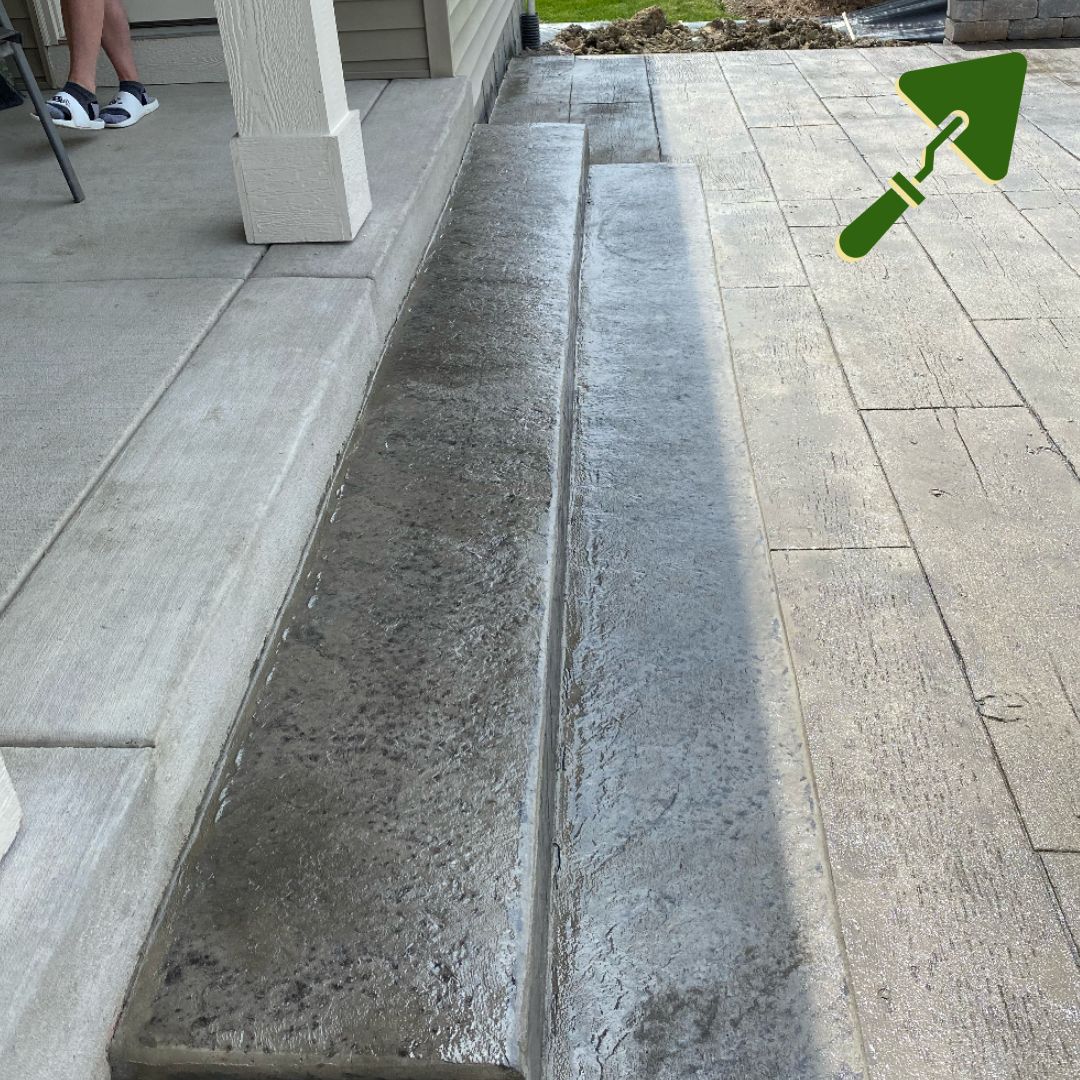
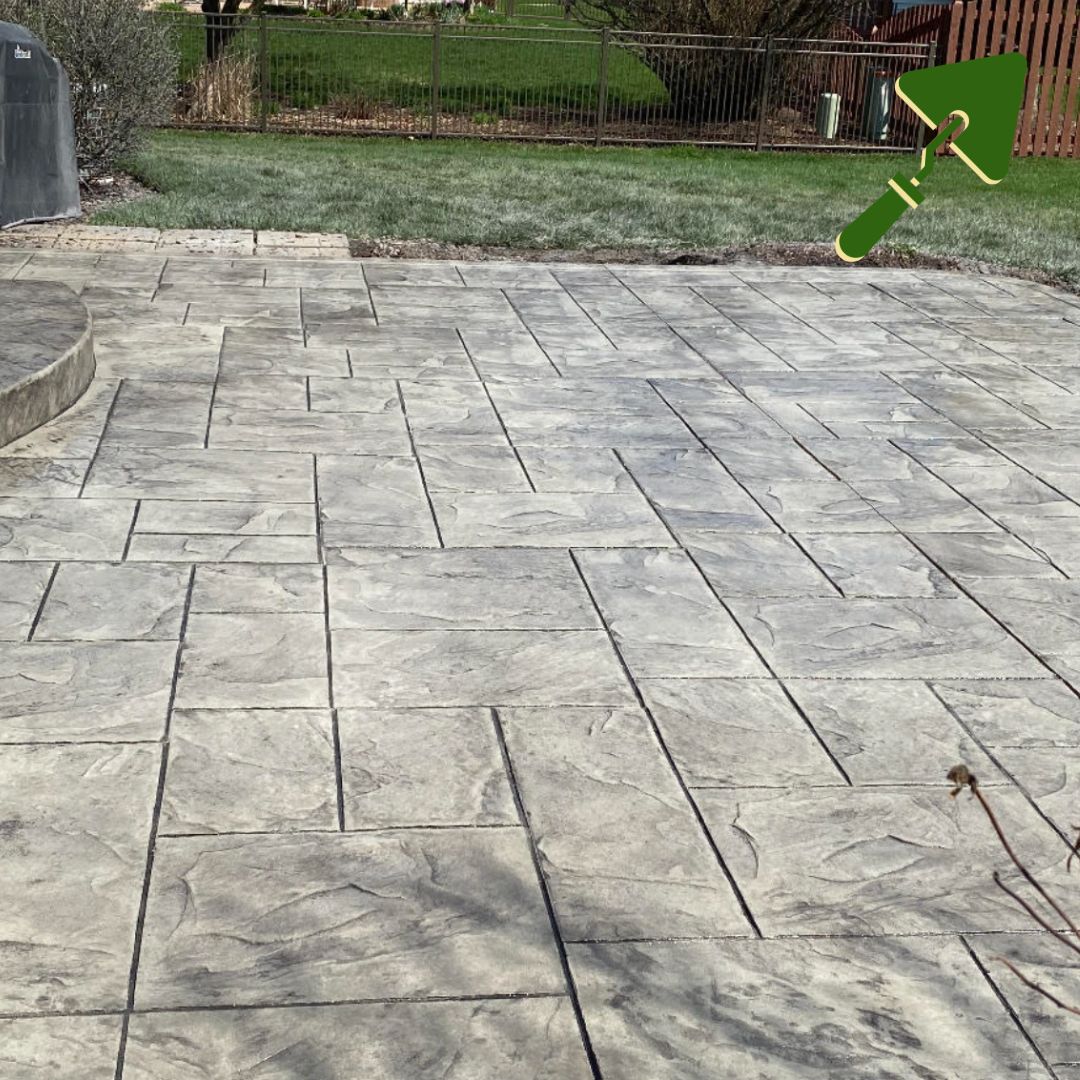
| Stamped | Stamps or seamless texture skins are pressed into the surface, and a release agent adds a second color. | A pattern, or a stone-like texture with no pattern lines, and a second, antiquing color. |
Sources: Wisconsin Ready Mixed Concrete Association, Concrete Network.
Broom is the usual finish for outdoor concrete, and stamped concrete typically needs resealing every 2 to 5 years. Pattern names, coloring methods and sealer care have a page of their own: stamped concrete patterns and colors.
Sizing and Laying Out a Backyard Patio
Size a patio by what will sit on it. Set the table, chairs and grill out on the lawn, pull the chairs back as if people were getting up, and stake the outline around them. Then check what the slab has to work around: the door and its step, the hose bib, window wells and downspouts.
Most patios are big enough to need control joints, and those lines show in the finished slab. The state ready mixed concrete association recommends one about every 10 feet on a 4 inch slab. Ask us where they will fall before pour day, so you can check them against the door and the steps.
If guests will reach the patio from the front, plan a concrete walkway from the driveway with it, so the two meet at one grade.
Concrete Patio Installation: Drainage, Slope and the Joint Against the House
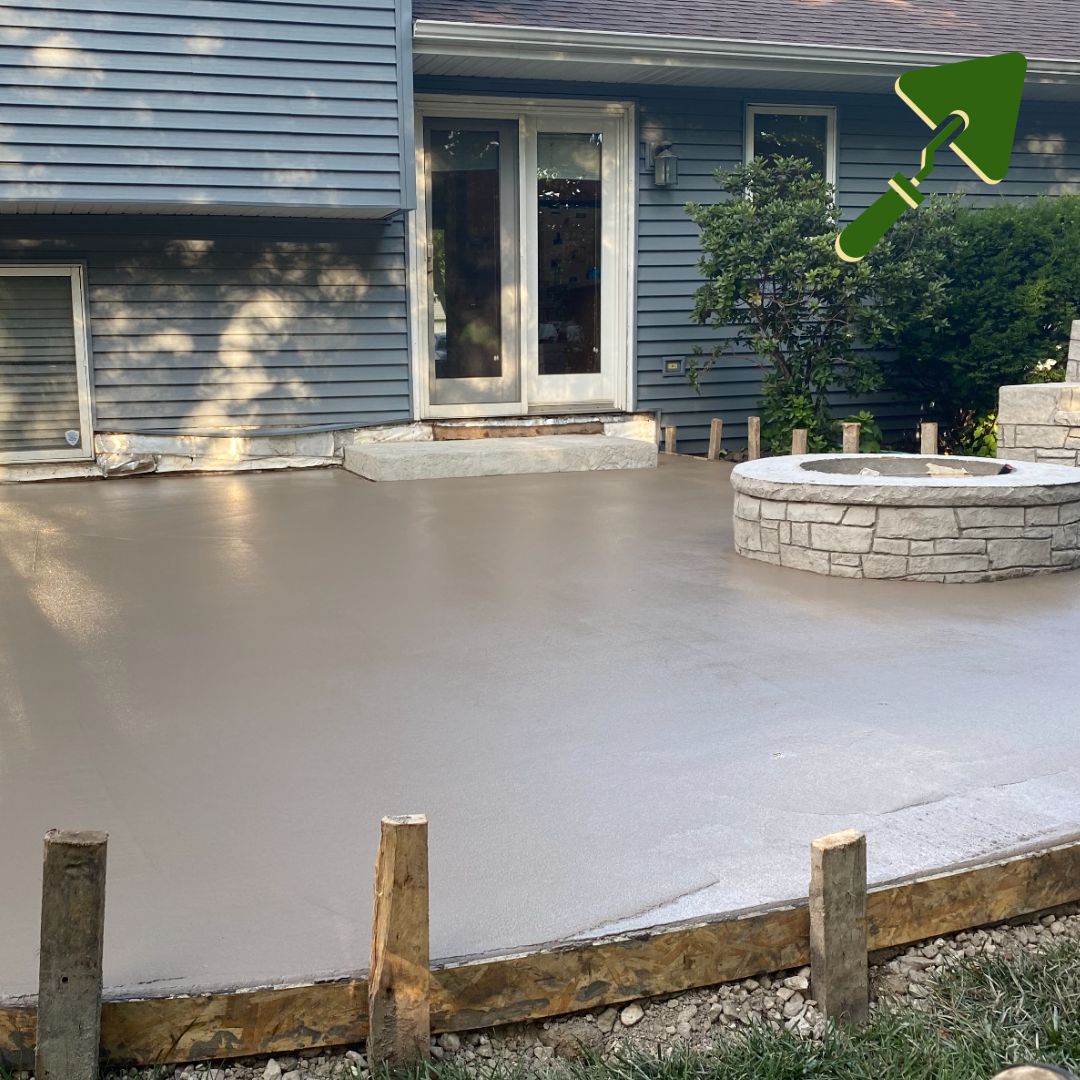
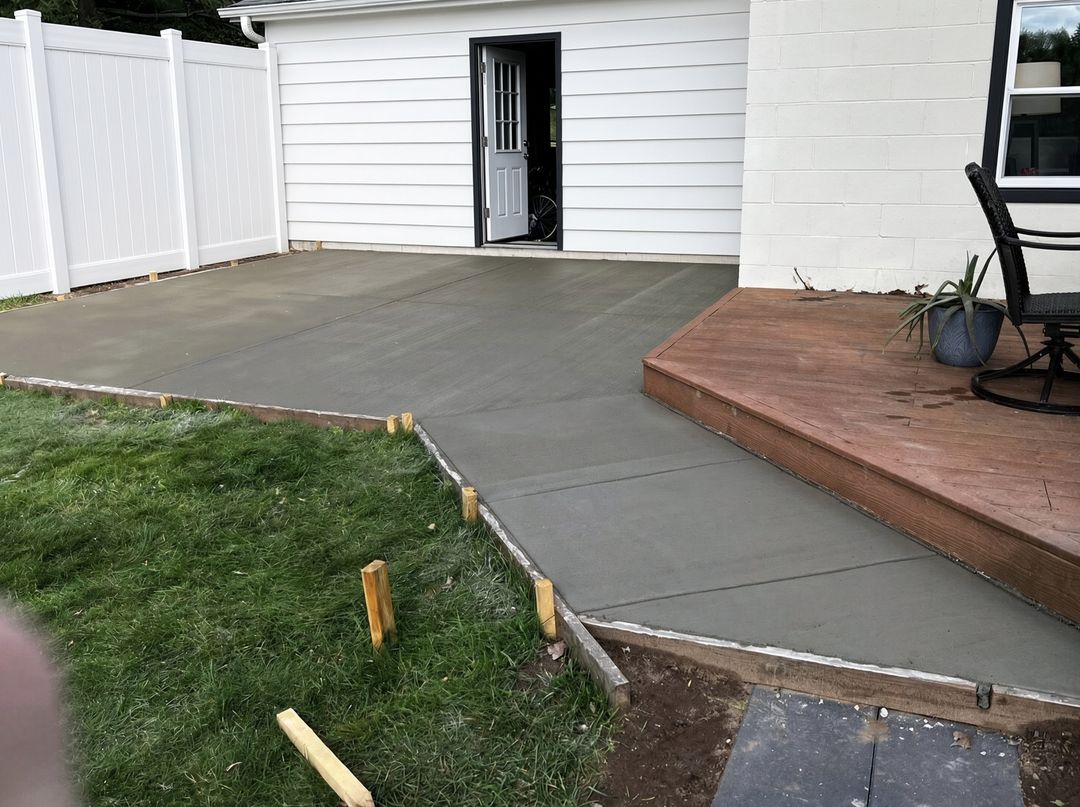
Patio trouble usually starts with water, and most of it can be headed off before the truck arrives. We look at where the yard drains, where the downspouts empty and how high the door sits. Then we grade and compact the base and set the forms so water runs off the slab and away from the house.
The Wisconsin Ready Mixed Concrete Association recommends sloping the slab, and the ground under it, away from the house at 1/4 inch per foot, which is 3 inches of fall across a 12 foot patio. A downspout that empties at the slab edge can wash out the base and let the slab settle and crack, so we check where each one empties before the forms go in.
Frost is why water matters this much in Eau Claire. The ground heaves only when frost-susceptible soil, water and freezing temperatures come together, and water is the one a patio layout can do something about.
Where the patio meets the house, a stoop or steps, the state association calls for an isolation joint the full depth of the slab. A house built to the state dwelling code sits on footings below frost and stays put. A concrete patio is a floating slab that moves a little as the ground freezes and thaws, and the joint lets the two move separately.
Patio Setbacks and Lot Coverage in Eau Claire
Where a patio can go is partly a zoning question, and it is easier to settle before we lay the patio out. City of Eau Claire zoning sets how close a concrete patio may sit to the lot line and how much of the lot may be covered. The numbers are in the notes below.
Lots near water are a separate case. Inside the city, a patio along a river, creek or lake may have to stay back from the bank. On lake and river lots in the towns, Eau Claire County shoreland zoning applies. Call Planning or the county Land Use office before you pick a spot near the water.
Concrete Patio Cost
The figures below are typical ranges for concrete patios, not a quote.
| Work | Published range | Notes |
|---|---|---|
| Plain patio slab, new | $6.50 to $19 | Size, slope, curves and drainage move a job within it. |
| Concrete patio replacement with tear-out and haul-off | $8.50 to $30 | Includes breaking out and hauling off an old concrete slab. |
Typical ranges, not a quote. A written estimate comes after we see the yard.
What moves a patio price is mostly the yard and your choices: the size of the slab, slope to cut or fill, curves, how far the concrete travels from the truck, and the finish. Small patios usually cost more per square foot. For a price on your own yard, call for a written estimate.
Concrete Patio Replacement: Old Patios, Decks and Paver Areas
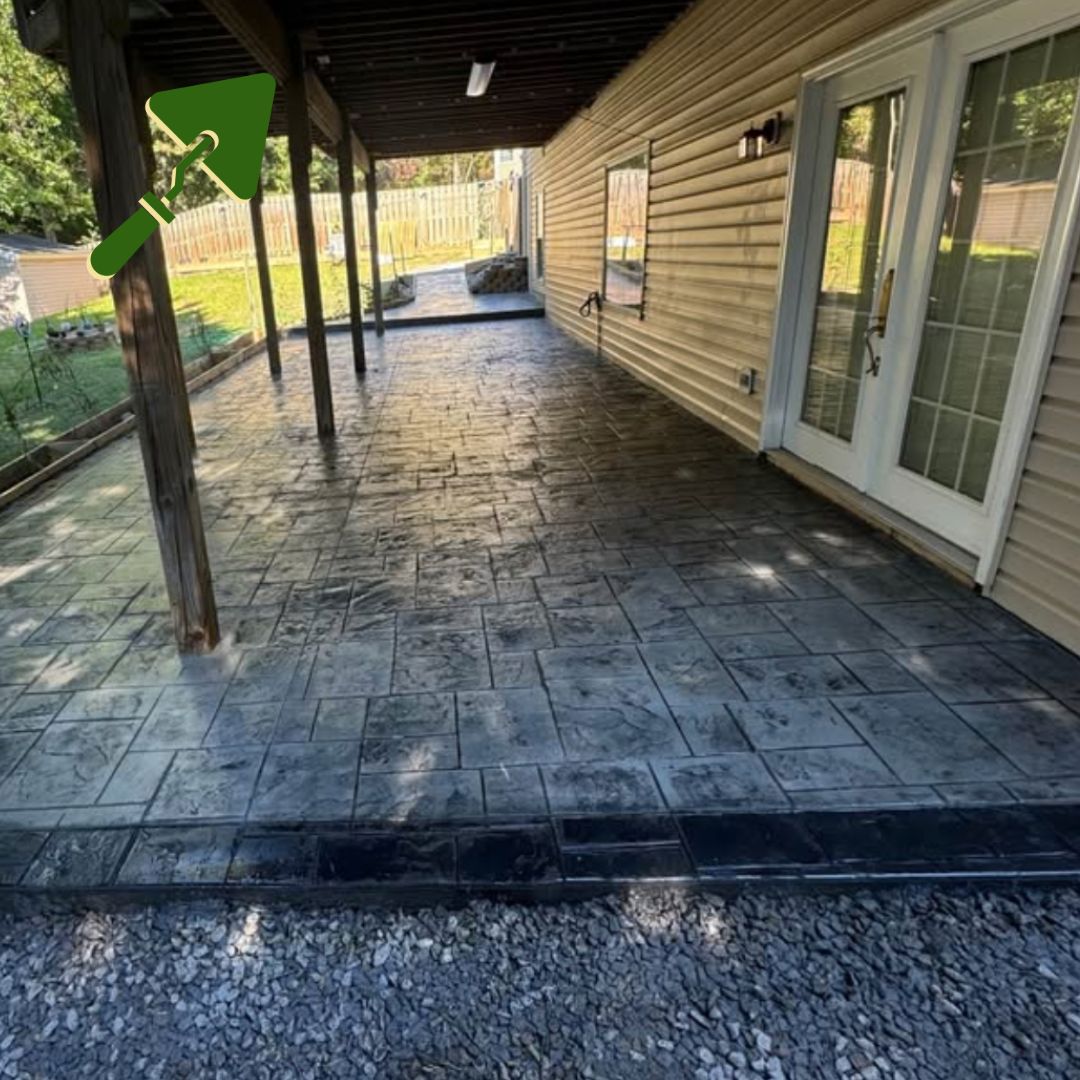
When an old concrete patio has heaved, broken up or settled toward the house, we tear it out, haul it off and pour a new one. As an Eau Claire concrete contractor, we do new patio installation and full patio replacement. We do not lift or level slabs. Mudjacking and foam lifting, which raise a sunken slab by pumping grout or foam under it, are other contractors’ work.
With the old slab, deck or pavers out, the base, the slope and the downspout routing can all be corrected before any concrete is placed. Resurfacing cannot do that. It is no fix for a slab that is heaving, badly cracked or freeze-thaw damaged, and it does not solve soil problems. Taking out a deck also leaves the door high, so the step or landing is planned with the slab.
Common Patio Mistakes
All four are hard to fix once the concrete has set. They are covered in the state or national ready mixed concrete association’s guidance, so each is a fair question for any concrete patio contractor, us included.
- Forms set on uncut grade
A 2x4 form board is only 3 1/2 inches tall, so the grade inside the forms has to be cut at least 1/2 inch lower for a true 4 inch slab.
- Wetting the surface to finish it
Water or dry cement sprinkled on to make finishing easier causes dusting and scaling.
- Joints cut shallow or late
Recommended depth is at least a quarter of the slab thickness, never under 1 inch. Sawed too late, the slab cracks on its own first.
- Counting on mesh to stop cracks
Wire mesh tends to keep cracks from opening up and does not prevent them.