
Stamped Concrete Patterns and Textures
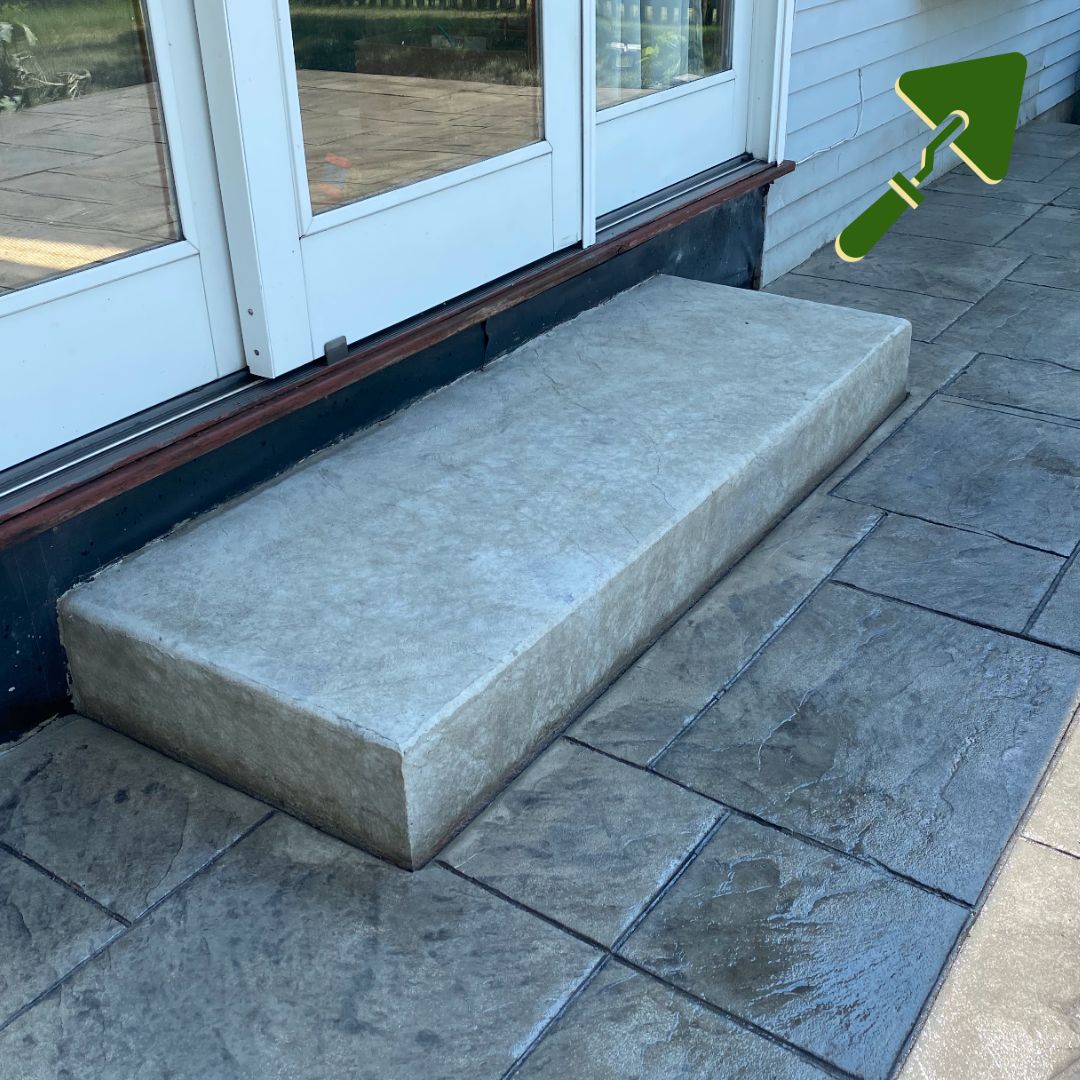
Stamped concrete starts as an ordinary pour. Once the slab is placed and floated, we press the stamps into the surface while the concrete will still take the print. There is no redoing it, so the pattern and colors are settled before the truck is ordered.
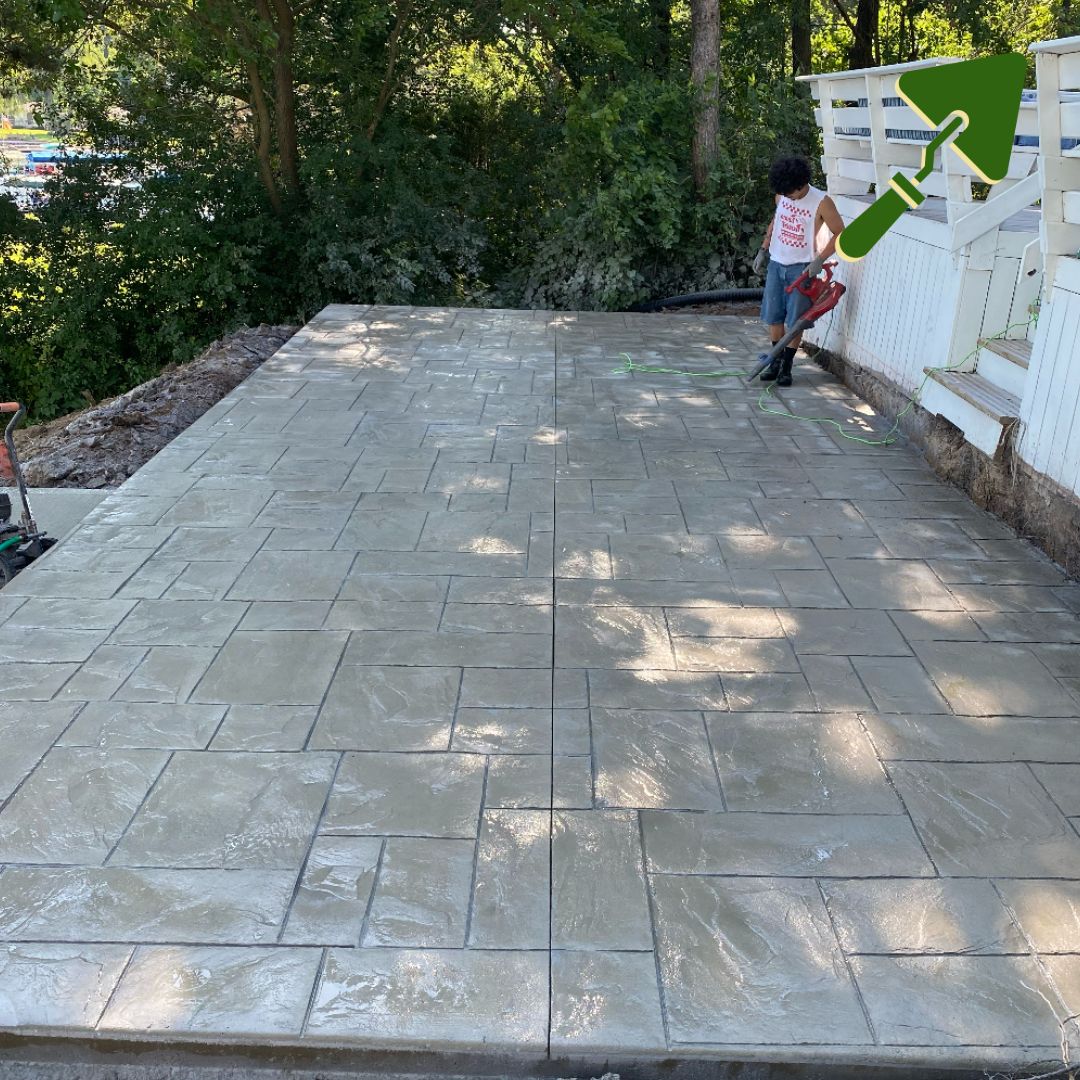
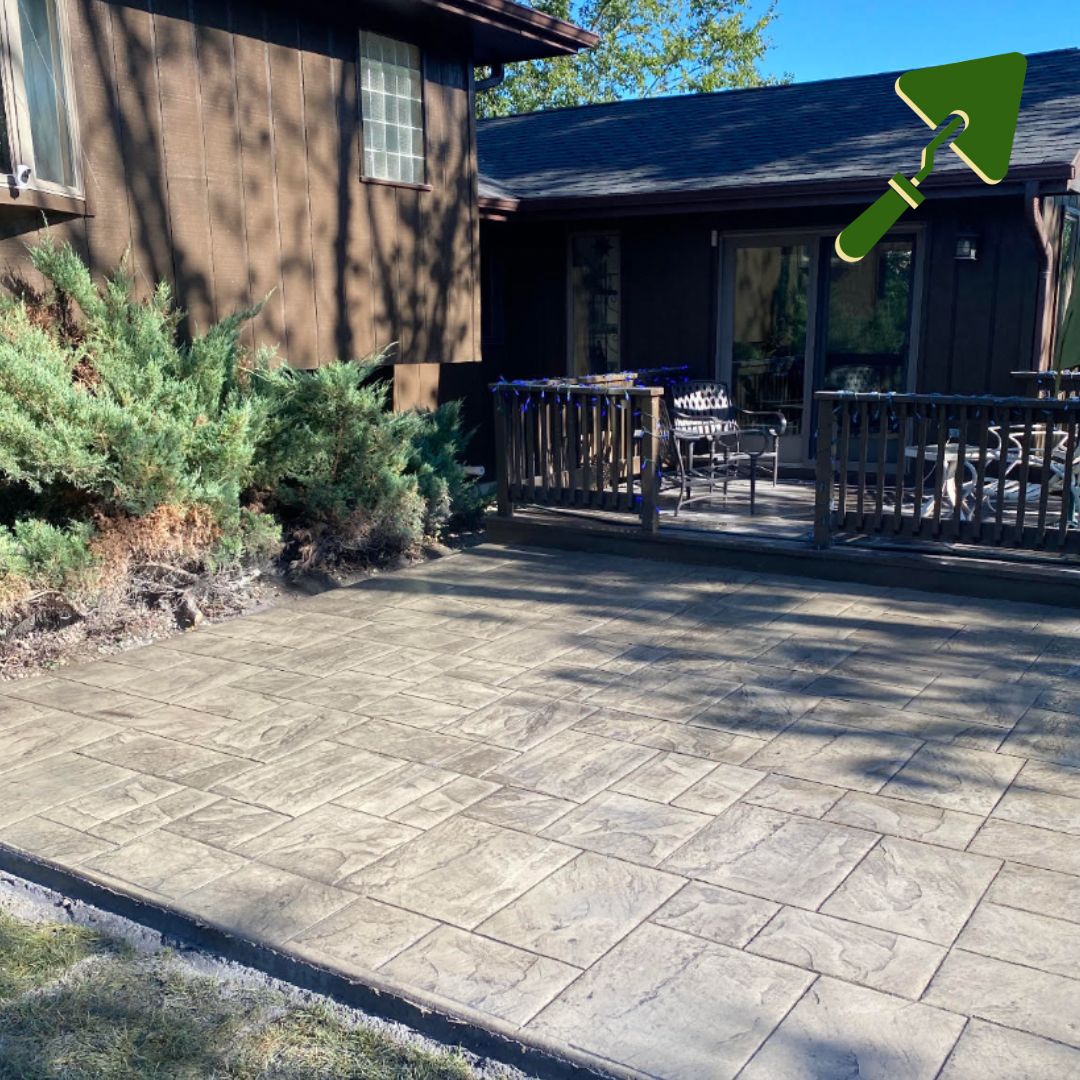
Most stamp patterns imitate cut slate, random stone, cobblestone, wood plank or brick. The pattern names belong to the stamp makers. The examples in Concrete Network’s pattern guide include Ashlar Cut Slate, Random Stone, London Cobblestone, Classic Wood, Running Bond New Brick and Herringbone New Brick. The lead photo here shows a light ashlar pattern.
What any stamped concrete contractor can offer depends on the stamp sets they own, so ask which sets we have before settling on a pattern from a photo. Seamless texture skins are another route to decorative concrete: a stone-like texture with no pattern lines.
How Stamped Concrete Is Colored
Color does as much as the pattern to make stamped concrete look like stone or brick. The base color goes in by one of two methods.
| Method | How it goes in | What it does | Color |
|---|---|---|---|
| Integral color | Mixed in, usually in the ready-mix truck | Colors the whole load | Suits more muted colors |
| Dry-shake color hardener | Worked into the surface before stamping | Colors only the top layer and leaves a harder surface | More vibrant |
Source: Wisconsin Ready Mixed Concrete Association, Colored and Stamped Concrete.
When you compare stamped concrete contractors in Eau Claire, ask which coloring method each price is built on. Sources disagree on how deep the hardener’s color goes, so we quote no depth.
A release agent does two jobs: it keeps the stamps from sticking, and it adds the second, antiquing color. On a cobblestone pattern, a colored release is often how the grout color goes in.
Stamped Concrete in a Wisconsin Winter: Where It Works and Where It Struggles
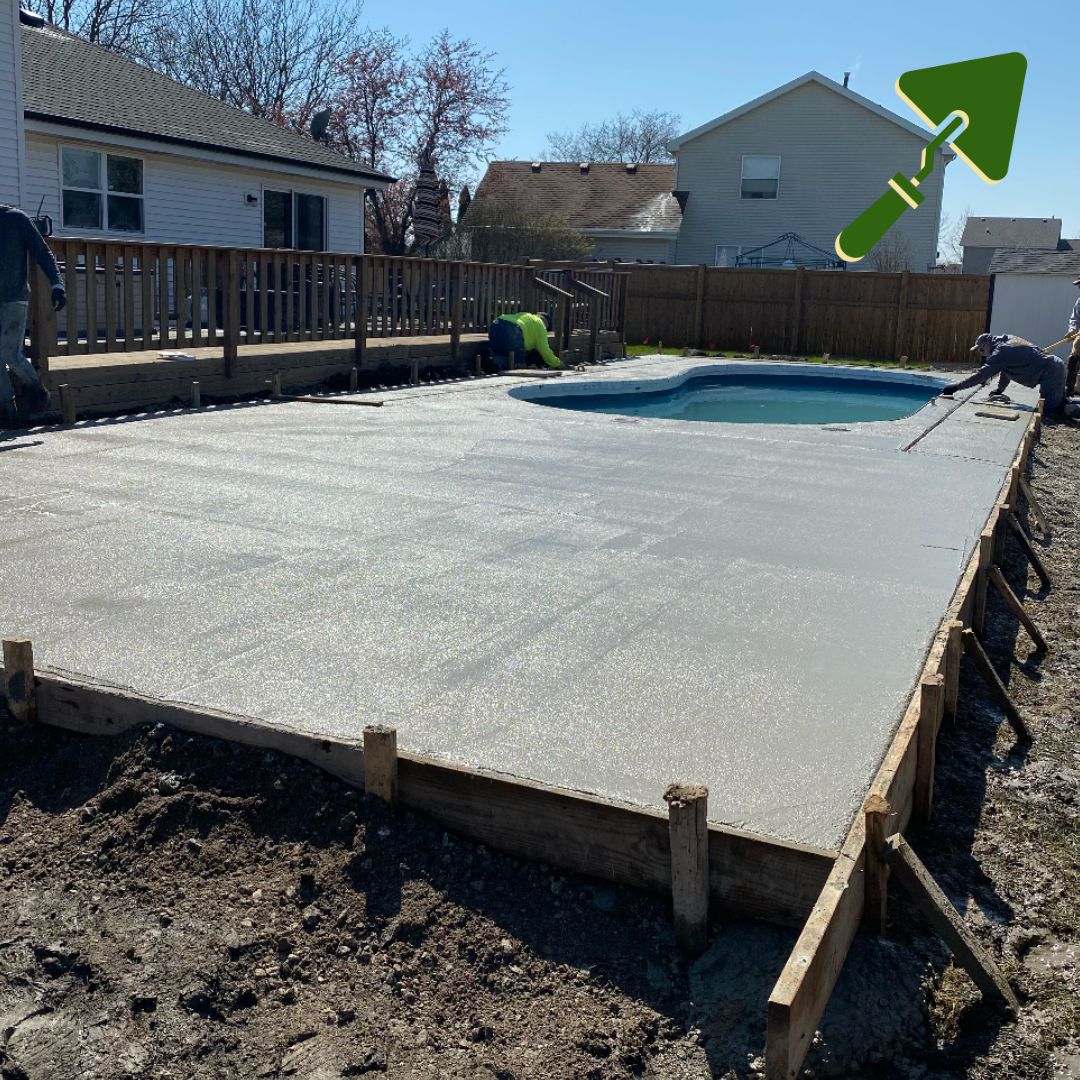
How a stamped slab comes through winter depends on where it sits and what lands on it. Two numbers give the scale of an Eau Claire winter.
Where it works. A patio or a back walk. No car parks on it, so the only deicer likely to reach it is the one you put down.
Where it struggles. Anywhere deicer lands. Freeze-thaw cycles can make a concrete surface flake or peel, and deicers make it worse. The trade calls that scaling, and the National Ready Mixed Concrete Association’s sheet on scaling explains it. On a stamped slab that surface carries the pattern, and with color hardener the color too.
In Eau Claire a driveway is the harder place for stamped concrete. As of 2026 the City of Eau Claire’s snow and ice control page says only its Ice Control Routes are salted and the rest get sand. Cars still carry salt and brine in from the salted routes, so a sanded street does not keep salt off the slab. Weigh that before choosing a stamped finish for a new concrete driveway.
Slip is the other weak spot. A glossy sealer can be slippery when wet, and a non-slip additive can be mixed in for walks and pool decks.
What Stamped Concrete Costs and Why
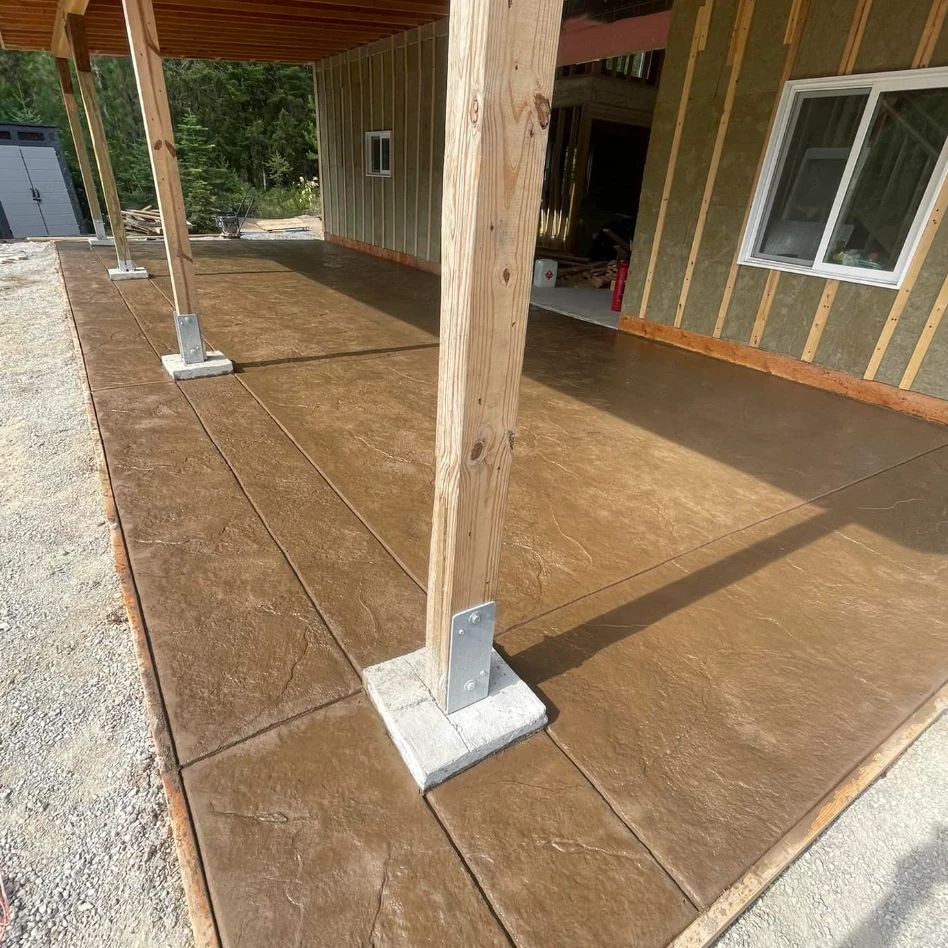
The figures here are typical ranges, not a quote. Stamped concrete typically runs $10 to $36 per square foot. One pattern and one color sits at the lower end. Borders, contrasting patterns, more than one color and hand-tooled designs move it up.
Stamping costs more than a plain slab because we put color, release agent and handwork into the same pour, and every extra color, border or pattern adds to it.
What else moves a quote:
- Size of the pour
Small jobs usually cost more per square foot, and some contractors apply a flat minimum.
- Color
What integral color adds depends on the pigment and the supplier.
- Tear-out
Removing an old slab adds work before any new concrete is placed. Tear-out and haul-off typically adds $2 to $11 per square foot.
- Site and base
Slope, curves and drainage change the grading, base work and forming done before the truck arrives.
Sealing Stamped Concrete, Year by Year
Sealer protects the color and texture of a stamped slab, and it wears off. On decorative concrete it is redone on a schedule set by the sealer maker’s directions, so ask which sealer goes on your slab. The intervals below follow published guidance, including Concrete Network’s page on sealing stamped concrete.
- First 7 days Curing
Keep foot traffic off for at least 24 hours, the wait one trade source gives. Curing runs at least 7 days.
- After about a month First sealer
Sealer goes on a dry slab. The state ready mixed association says to let it air dry at least 30 days. A trade page says 28, unless the product is a cure-and-seal made for early application.
- First winter No deicers
Use sand for traction instead. As of 2026 the City of Eau Claire offers sidewalk sand at no charge at its Central Maintenance Facility, one 5 gallon pail per residence.
- Every 2 to 5 years Reseal
Stamped concrete typically needs resealing every 2 to 5 years, yearly in harsh, high-traffic spots. The state association's driveway care tips prefer September.
Between coats, upkeep is sweeping and rinsing. When water stops beading or the color looks flat, the sealer is wearing thin.
Stamped or Plain Concrete: What Changes in Cost and Upkeep
These are typical ranges too, not a quote. A plain slab typically runs $6.50 to $19 per square foot. A one-pattern stamped job costs more than the same slab in a broom finish, and borders or added colors move it up from there.
Upkeep is closer than price: the Wisconsin Ready Mixed Concrete Association’s driveway care tips put resealing a concrete driveway on the same 2 to 5 year range, depending on the product. A plain slab’s broom texture gives good footing when wet, and it is the finish the association recommends for exterior flatwork.
We are a licensed and insured concrete company in Eau Claire, and we pour both stamped concrete and plain slabs. If the broom finish is winning, plain and broom-finish concrete patios have their own page.