
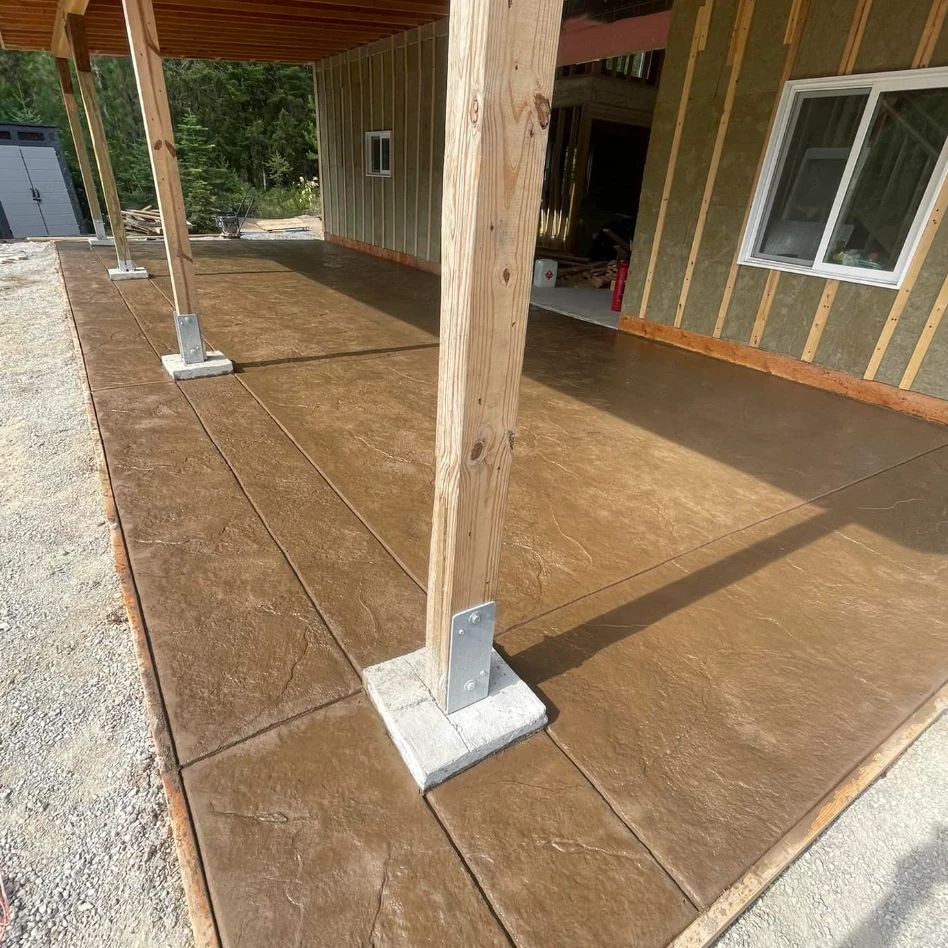
Concrete Slabs We Pour
A concrete slab is flat concrete poured on the ground to carry something: a car, a building, a piece of equipment. What it carries decides how it is built, so that is the first thing we ask about.
| Slab | What it carries | What to settle before the pour |
|---|---|---|
| Garage floor | Cars, and the snow and road salt that melt off them. | Attached or detached, and the pitch to the door. |
| Shed slab | A small building and what is stored in it. | The shed's exact footprint, where it sits on the lot, and how it is anchored. |
| Shop or pole building floor | Vehicles, equipment and work traffic. | The builder's plan, the heaviest thing that will roll on it, and anything set in the floor. |
| Equipment or hot tub pad | A heavy load in one spot. | The unit's footprint and what its maker asks for under it. |
Garage floors are the slab we are asked about most, and they have a page of their own: new garage floors and garage floor replacement.
What Goes Under a Concrete Slab
A slab is only as steady as the ground it sits on. We strip the sod and topsoil, cut the area to grade, and build a compacted granular base. Soft spots get dug out and filled, because a slab bridges a weak patch for a while and then cracks over it.
Water is the other half. Outdoors, the state ready mix association’s six steps call for sloping the slab and the ground under it away from buildings, and for routing downspouts so roof water does not wash out the base. Frost heave takes three things together: soil that holds water, water to feed it, and freezing temperatures. A slab layout can do something about the water.
Concrete is never placed on frozen or muddy ground. Frozen soil settles when it thaws, and whatever was poured on it settles too.
Slab Thickness, Reinforcement and Joints
Thickness follows the load. The state association recommends a 4 inch minimum for exterior flatwork, says that is adequate for cars and light trucks, and says 5 inches or more may be needed where heavy vehicles travel. A shop floor that will see a loaded trailer is a different slab from a pad under a garden shed, so we size it to what you tell us will be on it.
Reinforcement and joints do different jobs. Steel does not stop concrete from cracking. Held up inside the slab, it keeps a crack tight so the two sides stay level with each other. Control joints decide where the cracks go. They are cut or tooled into the surface in a pattern, and on a slab under a building we lay that pattern out against the walls and door openings.
Ask any concrete slab contractor, us included, three things before you sign: what the slab is being sized for, what goes under it, and where the joints will fall.
Shed and Accessory Building Slabs: City and County Rules
The slab follows the building, and the building is what the rules are written for. Inside Eau Claire, zoning sets where a shed or detached garage can sit and how large it can be. Outside city and village limits, the county or the town decides. Settle the location before the slab is laid out, because a slab is hard to move.
When a Slab Is Also the Foundation
Some slabs carry a building on their edge. A detached garage or a shop is often built on a floating slab with a thickened edge, and at that point the slab is the foundation and local rules decide how it is made. An attached garage or an addition is different again, because it ties to a house on frost footings.
If your slab holds up walls, read concrete foundations and footings before you settle on a design.
How a Concrete Slab Job Goes
- We see the site
We look at the ground, the drainage and how a truck reaches the spot. A backyard slab may need the concrete wheeled or pumped in.
- Utilities are located
Diggers Hotline needs at least three working days' notice before digging. Private lines such as an electric line to a garage are not marked, so tell us about those.
- Excavation and base
Sod and topsoil come out, the area is cut to grade, and the granular base goes in and is compacted.
- Forms and pour
Forms set the size, the height and the slope. The concrete is placed, struck off and finished.
- Joints and cure
Control joints are cut, and the slab is left to cure. Vehicles stay off for at least seven days, longer in cool weather.
Slabs are one part of what we do as concrete contractors in the Eau Claire area. If the slab is really a place to sit outside, start with our page on backyard concrete patios.