
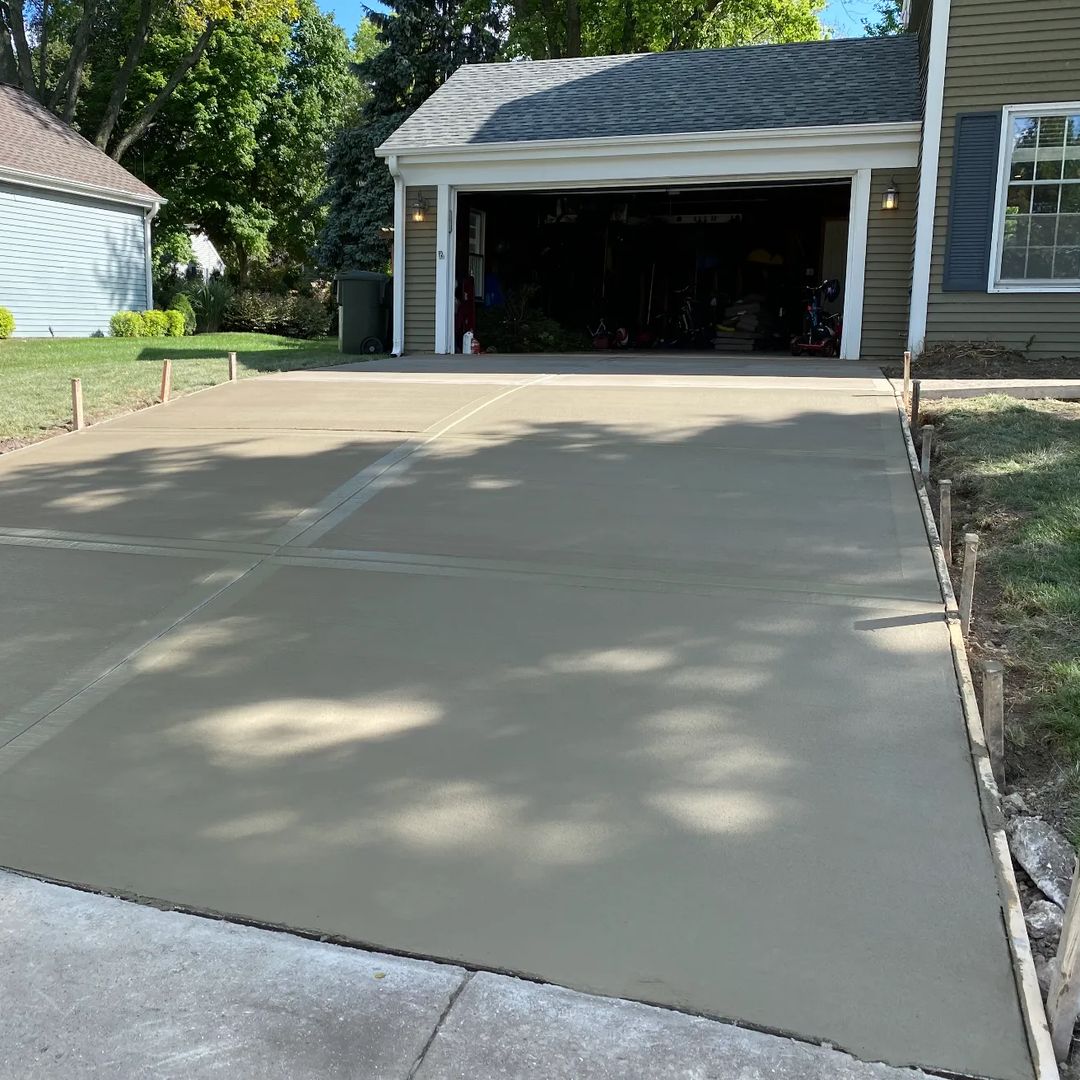
How to Read a Crack Before Any Concrete Crack Repair
Five questions sort nearly every crack in a slab. Answer them with the crack in front of you before buying filler or calling anyone, us included.
- Is it at a joint, or did it start from one? Control joints are planned cracks: a weakened line so the slab cracks straight where it was meant to. A crack running along the bottom of a joint is the joint doing its job.
- Do both sides sit at the same height? Run a hand or a straightedge across it. If one side stands higher, the slab has moved, and that is the most important fact about the crack.
- How wide is it? A trade rule of thumb puts the line at about a quarter inch: narrower than that, a crack is generally not structural and can be filled as a temporary repair.
- Is it growing? Pencil a mark at each end with the date and look again after a few months. A crack that runs past its marks, or reads wider in spring than it did in fall, has a cause still at work.
- Where does the water go? A crack beside a downspout, at a low spot or along the edge where the yard drains onto the slab has water under it, and water is what frost needs to heave a slab.
| What you see | What it usually means | What it needs |
|---|---|---|
| A web of fine, shallow cracks across the surface | Crazing. NRMCA describes it as rarely more than 1/8 inch deep and no threat to the slab's strength. | Nothing structural. Filling it is not practical. |
| A thin, flat crack across a panel or off a corner | Shrinkage. All concrete tends to crack, and joints only decide where most of it happens. | Leave it, or fill it to keep water and salt out. |
| Short cracks that showed up the day of the pour | Plastic shrinkage, from the surface drying faster than bleed water reached it on a hot, dry or windy day. | Usually cosmetic. Fill if it lets water in. |
| A crack with one side higher | The slab has moved: settled on one side or been pushed up by frost. | Not a filler job. Lifting if it sank in one piece, replacement if not. |
| A crack that is wider each spring | Something under the slab keeps moving it. | Find the cause first. Filler will keep tearing. |
| Cracks that cross joints and break a panel into pieces | The slab is failing, often over a soft or wet base. | Replacement of the panel or the slab. |
Crack types: National Ready Mixed Concrete Association, Concrete in Practice series.
Why Concrete Cracks Between the Joints
Concrete shrinks as it hardens, and it moves with temperature for the rest of its life. Control joints give that stress a place to go. The Wisconsin Ready Mixed Concrete Association recommends cutting them at least a quarter of the slab thickness deep, about 10 feet apart for a 4 inch slab and never more than 15 feet. On public sidewalks the City of Eau Claire’s own standard is tighter, with contraction joints no more than 5 feet apart.
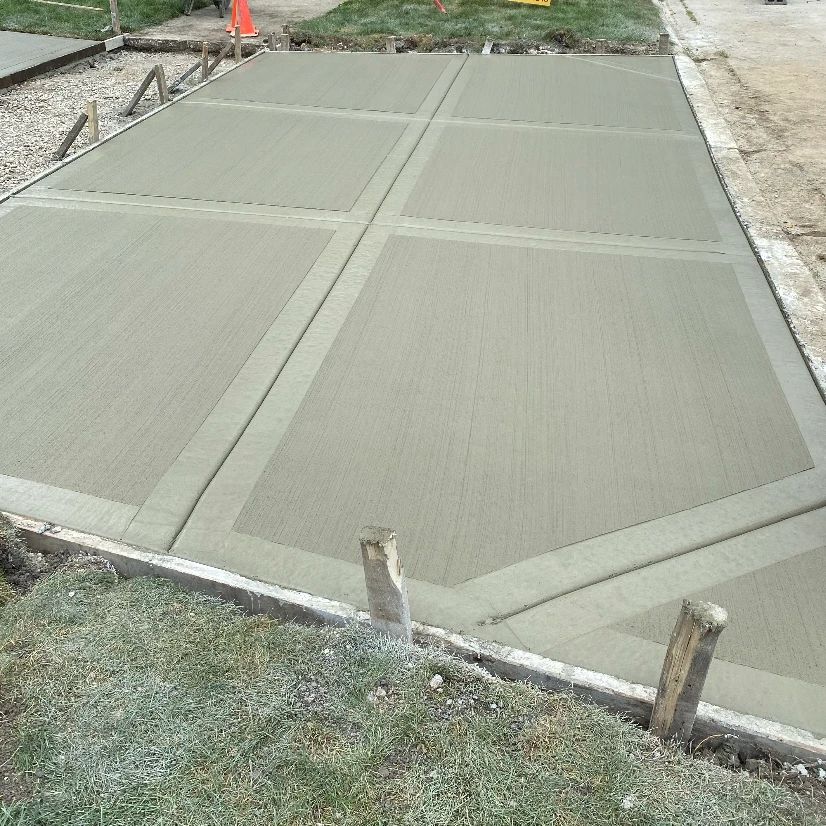
When the joints are too far apart or too shallow, the slab cracks on its own between them, often in a line that wanders. That is a joint layout problem, not a sign the slab is about to fail. A crack like that lies flat, and filling it is reasonable. The cracks that matter are the ones that have changed the shape of the slab.
Types of Concrete Crack Filler and What Each Suits
The one question that picks a filler is whether the crack still moves. Outdoors, nearly every crack does: it opens in cold weather as the concrete shrinks and closes in summer. A filler for an outdoor crack has to stretch with it. A rigid filler that bonds well indoors tends to crack again outdoors, right beside the line where it was glued.
| Filler | How it behaves | Where it fits | Where it falls short |
|---|---|---|---|
| Flexible sealant (caulk type, in a tube) | Stays rubbery after it cures and stretches as the crack opens and closes. | Outdoor cracks and joints on walks, driveways and patios, including sloped ones. | Needs a backer under it in wide gaps, and has to be redone as it ages. |
| Pourable self-leveling sealant | Runs into the crack and levels itself, then cures flexible. | Cracks and joints on flat, level slabs. | Runs out of cracks on a slope or a vertical face. |
| Cement-based patching compound | Cures hard, much like concrete. | Chipped edges, popouts and shallow broken spots on concrete that is not moving. | Cracks again on a crack that moves, and will not match old concrete in color. |
| Epoxy | Cures rigid and bonds strongly to clean concrete. | Cracks that have stopped moving, where the sides need bonding, mostly indoors and on vertical work. | A moving outdoor crack. The rigid bond tends to break beside itself. |
| Backer rod | A foam rope pushed into the crack. Not a filler itself. | Wide gaps, so the sealant above it stays thin and grips only the two sides. | Nothing on its own. It only supports the sealant. |
Backer rod guidance: Family Handyman.
Backer Rod for Wider Cracks
A sealant grips best when it bonds to the two sides of a crack and not to the bottom, so it can stretch like a band. In a deep or wide gap, foam backer rod sets that depth. Family Handyman’s guidance is to caulk cracks a quarter inch wide or less without rod, and for wider gaps to push in rod one size larger than the gap, so it fits tight, with its top about a quarter inch below the surface.
Epoxy Concrete Crack Fillers: Rigid by Design
Epoxy concrete repair is the right tool for a narrow set of cracks. It cures harder than the concrete around it in many cases, and Concrete Network’s crack injection guide calls epoxies the only choice for cracks that need structural repair, while it credits polyurethane with flexing enough to keep a seal through slight movement. That is the trade in one line: epoxy bonds, flexible products seal.
On an outdoor slab in a Wisconsin winter, that bond is the weakness. A driveway or walk crack moves every season, and a rigid repair either cracks again or pulls away. Epoxy also does nothing about why the crack formed. Save it for a crack that has stopped moving, such as an interior slab that cracked once and has held still.
Cracks in a basement or foundation wall are a different problem with their own repair methods, and foundation repair companies handle them. Nothing on this page is meant as advice for a wall that holds up a house.
Why Crack Filler Needs Redoing in Eau Claire
Filler fails in two ways: it lets go of the sides of the crack, or it tears down the middle. Western Wisconsin works on both. Concrete shrinks in the cold, so a crack opens widest in the coldest weather, just when the filler is stiffest. Every spring the bond lines that held through summer get tested again.
Water is the rest of it. Water that gets past a failed bead into a crack can freeze and expand there, and deicers make freeze-thaw scaling of the surface worse. As of 2026 the City of Eau Claire salts only its Ice Control Routes, but cars carry salt and brine home on their tires, so a driveway on a sanded side street still sees it. Even plain salt adds freeze-thaw cycles at the surface.
Below the slab, frost heave needs three things at once: frost-susceptible soil, available water and freezing temperatures. NRCS soil maps show most of the land in Eau Claire as deep, excessively drained sand, led by Plainfield loamy sand, which the agency rates low for frost action. That rating covers natural ground, not fill or the backfill beside a basement wall. Not all of the valley is sand either: NRCS also maps silt loams such as Seaton, formed in windblown silt and rated high for frost action. A crack that opens wider every spring on ground like that is telling you about the water and soil, not the filler.
Family Handyman suggests going around the house once a year and refilling gaps and joints. In practice, that means a look every spring. A bead that peeled off the sides of a crack that has not moved is routine upkeep. A bead torn open because the crack widened or one side rose is the slab moving.
How to Fill a Crack in Concrete
Any crack filler sold for concrete comes with its own directions, and those govern. The order of work is the same for nearly all of them.
- Pick a dry day in the right season
Every sealant label lists a minimum temperature for the air and the concrete. At the Eau Claire airport April still averages 14.1 nights at or below 32 F and October 9.6, by NOAA's 1991 to 2020 normals, so late spring through early fall is the practical window.
- Clean the crack out
Dig out loose concrete, dirt, weeds and old filler with a screwdriver or wire brush, then blow or vacuum out the dust. Family Handyman says the top inch of the crack needs to be cleaned well when old caulk is being replaced.
- Let it dry
Sealant does not bond to a damp crack. Give it a dry day after rain or washing.
- Set backer rod in wide gaps
Over about a quarter inch wide, push in foam rod a size larger than the gap so the sealant sits shallow and grips only the sides.
- Fill with the right filler
Self-leveling sealant on flat slabs, gun-grade sealant on slopes and edges, patching compound only for broken spots that do not move. Keep the bead flush with the surface, not mounded above it.
- Keep traffic off until it cures
Cure time depends on the product, the temperature and the humidity, so go by the label before walking or driving on it.
A filled crack still shows. Sealant is a different color and texture from concrete, and patching compound does not match old concrete either. Filling is about keeping water out, not making the crack disappear.
When a Crack Means the Slab Needs Replacing
Filler handles cracks in concrete that is otherwise sound. These cracks say the concrete or the ground under it has failed, and that is the work we take on.
- One side sits higher than the other
A crack with a lip means the slab has moved. It is also a trip edge on a walk. Filler fills the gap and leaves the step.
- It widens every year
A crack that tears each new bead of filler has a cause still working, usually water or soft ground under the slab.
- The panel heaves in winter
A panel that rises in January and settles unevenly in April has frost and water under it, and nothing applied from above reaches them.
- Cracks cross the joints and break the panel up
When cracks run through several panels or leave pieces that rock, the slab has stopped acting as one piece.
- The surface is scaling around the cracks
Heavy, progressing scaling may not be feasible to repair, and a patch over failing concrete has nothing sound to hold.
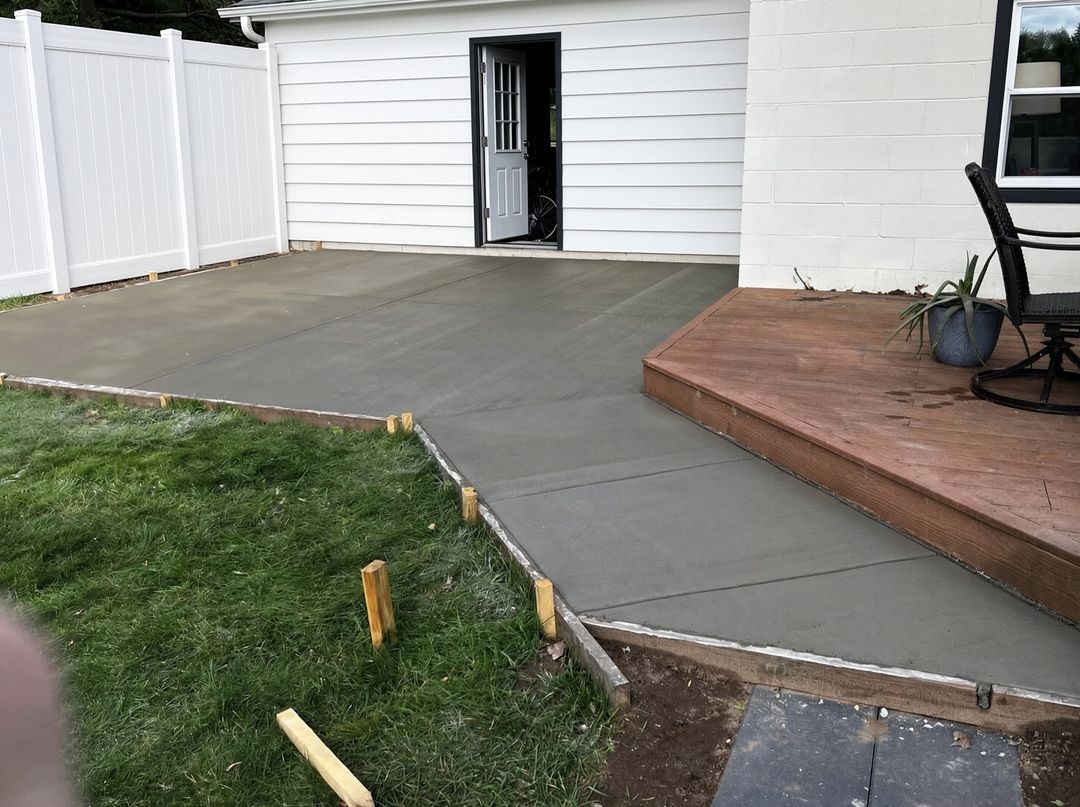
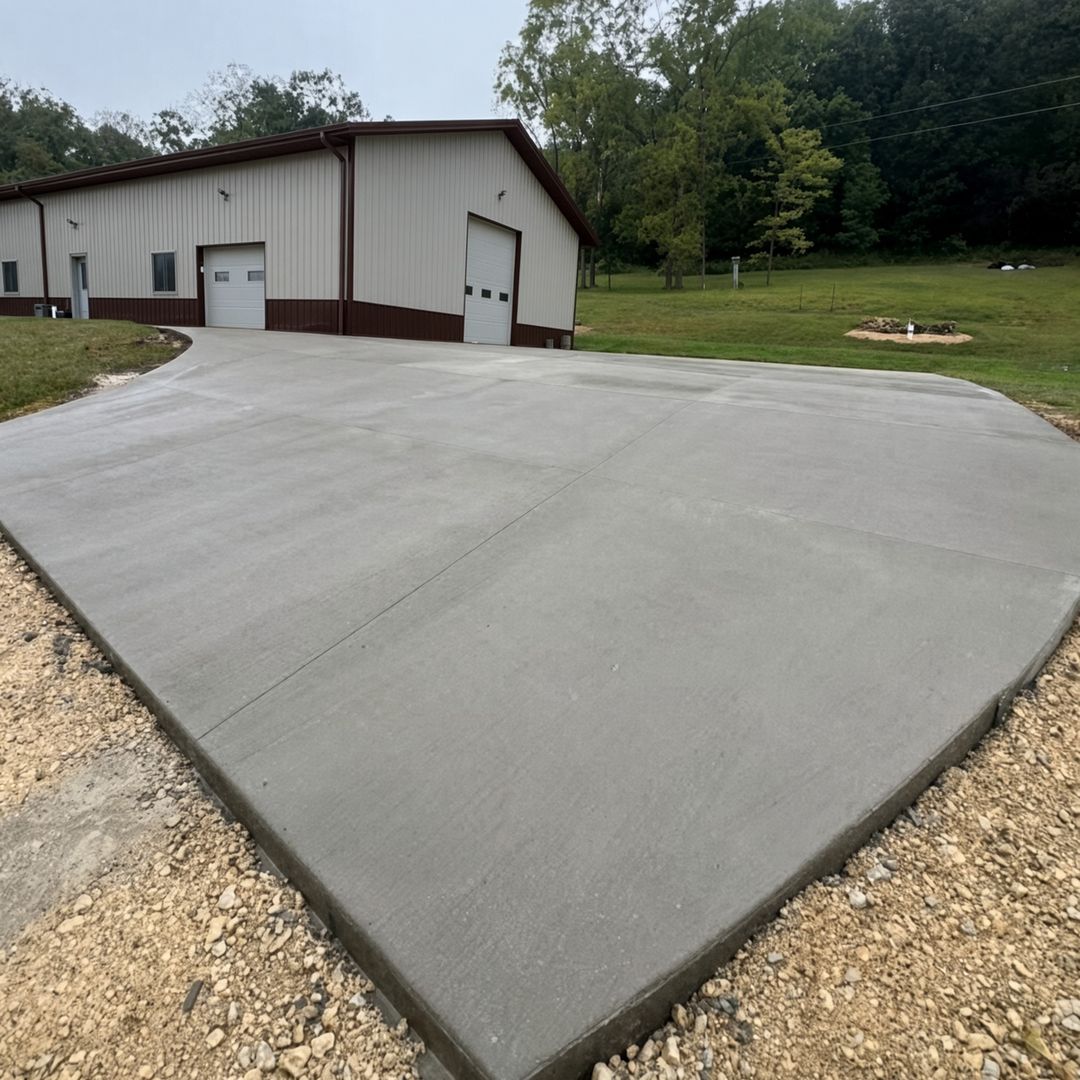
Replacement does not have to mean the whole slab. Failed panels can often be cut out along the joints and poured new over a rebuilt base, and our guide to how failed panels are cut out and replaced at the joints shows where that works and where the whole slab is the better buy. For a driveway cracked across most of its panels, see replacing a cracked concrete driveway. A patio that has cracked and tipped toward the house is covered under patio slabs that cracked or sank.
If the slab sank in one piece without breaking up, a concrete leveling company may be the cheaper call, as when a sunken slab can be lifted instead explains. A garage floor takes salt and meltwater off the car all winter, so its cracks get their own garage-specific guide. In Eau Claire the public sidewalk along the street is the property owner’s responsibility, and who answers for a cracked public sidewalk covers the City’s repair program.
What Concrete Crack Repair Costs
The figures here are national published ranges. No verified Eau Claire or Wisconsin price data exists for crack filling. HomeAdvisor’s concrete driveway repair cost guide, page updated June 2026, puts patching, sealing and repairing cracks at $0.50 to $3 per linear foot, and says most pros set a minimum fee, often $100 to $150, to cover the trip and basic materials. These are typical national figures, not a quote, and they are not our prices, because we do not fill cracks.
Three things move a crack filling price most: how many feet of crack there are, how much old filler has to be dug out first, and whether wide gaps need backer rod. A homeowner doing it with a tube of sealant pays for materials only.
Cracks That Need More Than Filler: Call Us
If the cracks in your slab are flat, tight and holding still, fill them or leave them, and we will say exactly that on the phone. If they have an offset, keep widening or have broken the slab into pieces, the fix is new concrete over a rebuilt base, and that is what we do.
Take a photo of the worst crack with a coin or a tape measure beside it, and one of the whole slab, then send photos of the cracks. We are concrete contractors who replace cracked slabs in Eau Claire, working in Eau Claire, Altoona, Chippewa Falls and nearby Chippewa Valley towns.