What Concrete Resurfacing Can and Cannot Fix
Resurfacing treats the top of a slab. It works when the trouble stays up there, and it fails when the trouble is in the body of the slab or the ground below it. Sort your slab with this split first, because everything else on this page depends on it.
| Condition | Good candidate | Poor candidate |
|---|---|---|
| Slab position | Sits flat, with no edge standing above its neighbor. | Heaved, settled or rocking underfoot. Resurfacing does not solve soil problems. |
| Surface wear | Light scaling, small spalls, popouts or a worn broom texture. | Scaling across most of the slab that keeps spreading, or a top that sounds hollow. |
| Cracks | Hairline cracks and crazing that lie flat. | Wide or active cracks, or any crack with one side higher. |
| Looks | Stains, discoloration and old patches on sound concrete. | A slab that looks bad because it is breaking up underneath. |
| Concrete below the top | Sound and air-entrained, so the bond has something to hold. | Freeze-thaw damaged. There is nothing solid to bond to. |
| Water | Runs off the slab and away from the house. | Ponds on the slab, runs under the edge, or drains toward the foundation. |
Limits: Concrete Network resurfacing guide; cement industry guidance (PCA IS177) on overlays over sound, air-entrained concrete.
The cement industry’s wording on scaling is the one to remember: a thin bonded overlay can usually fix a scaled surface if sound, air-entrained concrete lies below it. Air entrainment puts tiny bubbles in the concrete that give freezing water room to expand. Scaling that stays at the top of an air-entrained slab is a surface problem. On a slab poured without air, the concrete under the flakes may be just as vulnerable, and a new layer does nothing for it.
A Slab Test Before You Resurface Concrete
You can run these checks yourself in an afternoon with a straightedge, a hammer and a glass of water. Do them before asking for a resurfacing quote, and repeat the first one in spring if the slab was checked in winter, because a panel can ride on frost.
- Check for movement
Lay a straightedge across every joint and crack, and stand on each panel near its corners. A lip, a rock or a hump means the slab has moved, and the test ends there: it is not a resurfacing candidate.
- Measure the cracks
Slide a credit card into the widest cracks. Concrete Network says cracks that wide or wider need repair before an overlay. Mark the ends of any crack in pencil and see if it grows.
- Sound the surface
Tap the worn areas with a hammer or drag a length of chain across them. Cement industry guidance says a ringing sound marks intact concrete and a hollow sound marks a delaminated layer that would have to come off.
- Pour a little water
Water that beads up points to an old sealer or coating, which has to be stripped before anything will bond. Water that soaks in shows open concrete.
- Watch the slab in the rain
See where water stands, where the downspouts empty and whether the yard drains onto the slab. Water under an overlay is what lifts it.
A slab that passes all five is worth a call to a resurfacing company. One that fails the first check, or fails the others across most of its surface, belongs with when failed concrete has to come out, our parent guide on this topic.
What Resurfacing Is: Overlays, Skim Coats and Microtoppings
Most exterior resurfacing products are cement-based and polymer-modified. The polymers help a thin layer grip old concrete in a way plain cement paste cannot. Concrete Network describes the range of overlays as running from about the thickness of a credit card to an inch or more, and the thickness decides what each one can hide. You will also hear the work called concrete refinishing, which is a looser term, so ask what product is going down.
| Type | Typical thickness | What it suits | Where it falls short |
|---|---|---|---|
| Skim coat or microtopping | 1/16 to 1/8 inch | Renewing color and texture on sound, flat concrete. | Too thin to hide much. Patched spots and cracks can telegraph through. |
| Spray-applied or textured overlay | Thin coats, by the maker's directions | Walks and patios where a new look and grip are the goal. | Follows the surface under it, so it needs the same sound slab. |
| Self-leveling overlay | 1/4 to 3/4 inch | Evening out a worn or gouged surface. | Flows to low spots, so it does not suit a sloped exterior slab without a maker's approval. |
| Stampable overlay | Up to about 3/4 inch | Adding a pressed pattern to old concrete. | Often needs aggressive prep and primers, and carries the same bond risk as any overlay. |
Thicknesses: Concrete Network. Figures vary by product, and the maker's directions govern.
A stamped overlay copies the look of a stamped slab without the depth. If you want that finish and the slab under it is tired anyway, compare it against new stamped concrete pours. Garage floors take salty meltwater on the inside of the door, so resurfacing a pitted garage floor has its own section on that page.
Why Concrete Overlays Delaminate in Eau Claire
Delamination is the overlay letting go of the slab, in sheets or in spots that sound hollow first. Concrete Network calls poor prep the most common cause of overlay failure, and that holds everywhere. A Chippewa Valley winter adds its own pressure on the bond line.
Those 163 days count cold days, not freeze-thaw cycles inside a slab, and no reliable local count of those exists. Together the two numbers show the squeeze: the season for placing an overlay is short here, and the season for testing it is long.
Freeze-Thaw and Deicers at the Bond Line
Scaling comes from freezing and thawing, and deicers make it worse. An overlay does not end that process. It moves it to a thin layer sitting on a seam. Water that gets through a pinhole, an edge or a hairline crack can freeze under the overlay and pry it up. Cement industry guidance warns of the same thing with impermeable coatings on concrete, where water freezing under the coating can cause delamination, and it calls for a breathable treatment.
Makers do rate some overlays for freezing and thawing, and Concrete Network says a microtopping can stand up to it if applied and maintained properly. Those conditions carry a lot of weight. We found no published figure for how an overlay holds up to Wisconsin deicers, so treat any specific promise with care. Concrete Network also notes that a higher-build material or one containing aggregate often performs better in aggressive environments, and that some makers suggest yearly resealing depending on traffic and freeze-thaw exposure.
Moisture Under the Overlay
A slab on the ground is rarely dry. Moisture moves up through it, and Concrete Network says it concentrates at joints, cracks and saw cuts. Pressure from rising vapor, along with the mineral salts it carries, can lift an overlay from below. This is where drainage matters. A downspout that empties at the slab edge or a low spot that holds water keeps feeding the underside of the job.
Frost Heave and Moving Cracks
Frost heave needs three things at once: frost-susceptible soil, available water and freezing temperatures. NRCS soil maps show most of the land in Eau Claire as deep, excessively drained sand rated low for frost action, but that rating covers natural ground, not fill or backfill. NRCS also maps silt loams in the area, such as Seaton, rated high for frost action. On ground like that, a slab can move a little every year, and a rigid skin bonded to it has to move too.
Concrete Network puts the crack problem in one line: put an overlay on cracked concrete and you get a cracked overlay. A crack that opens and closes with the seasons, the kind covered in why outdoor cracks keep moving, reflects through to the new surface. Sinking is the same story. A slab that dropped needs a lifting company’s look at the void or new concrete, and a thin layer over the low spot leaves the slab where it is.
Prep That Decides Whether Resurfacing Lasts
Prep is most of the job and the part you will never see once the overlay is down. Each shortcut below costs less on the day and shows up later as a hollow spot or a peeling edge. Ask how each one will be handled before you sign.
- Washing instead of profiling
Cleaning removes dirt and oil. The overlay also needs a roughened surface to grip, and Concrete Network names grinding or shot blasting among the most effective ways to get it. Ask what profile the product calls for.
- Leaving old sealer in place
Coatings, sealers and paint have to be stripped, because the overlay bonds only to what it touches.
- Covering unsound concrete
Loose scale, spalls and delaminated spots come off down to solid concrete first.
- Skipping crack repair
Cracks are repaired before the overlay goes down. Filling a crack does not stop it moving, so a moving crack is a reason to stop, not a detail to cover.
- Paving over the joints
A joint in the slab keeps working under the overlay. Carry the joints through to the new surface, or they will show up as cracks or ghost lines.
- Working in the wrong weather
Concrete Network's range is 50 F to 90 F, and it says surface temperature matters as much as air temperature. Cold concrete, direct sun and wind all work against the bond. The product's label has the last word.
Time to traffic depends on the product. One system in Concrete Network’s resurfacing guide allows 48 to 72 hours after the final coat before vehicles, and the maker’s directions override any general figure.
Driveway Resurfacing: Vehicle Loads, Salt Drip and the Apron
Concrete driveway resurfacing is the hardest test of an overlay on a house. A walk or a patio asks a thin layer to take feet and weather. A driveway adds tires, weight and the salt that comes with them.
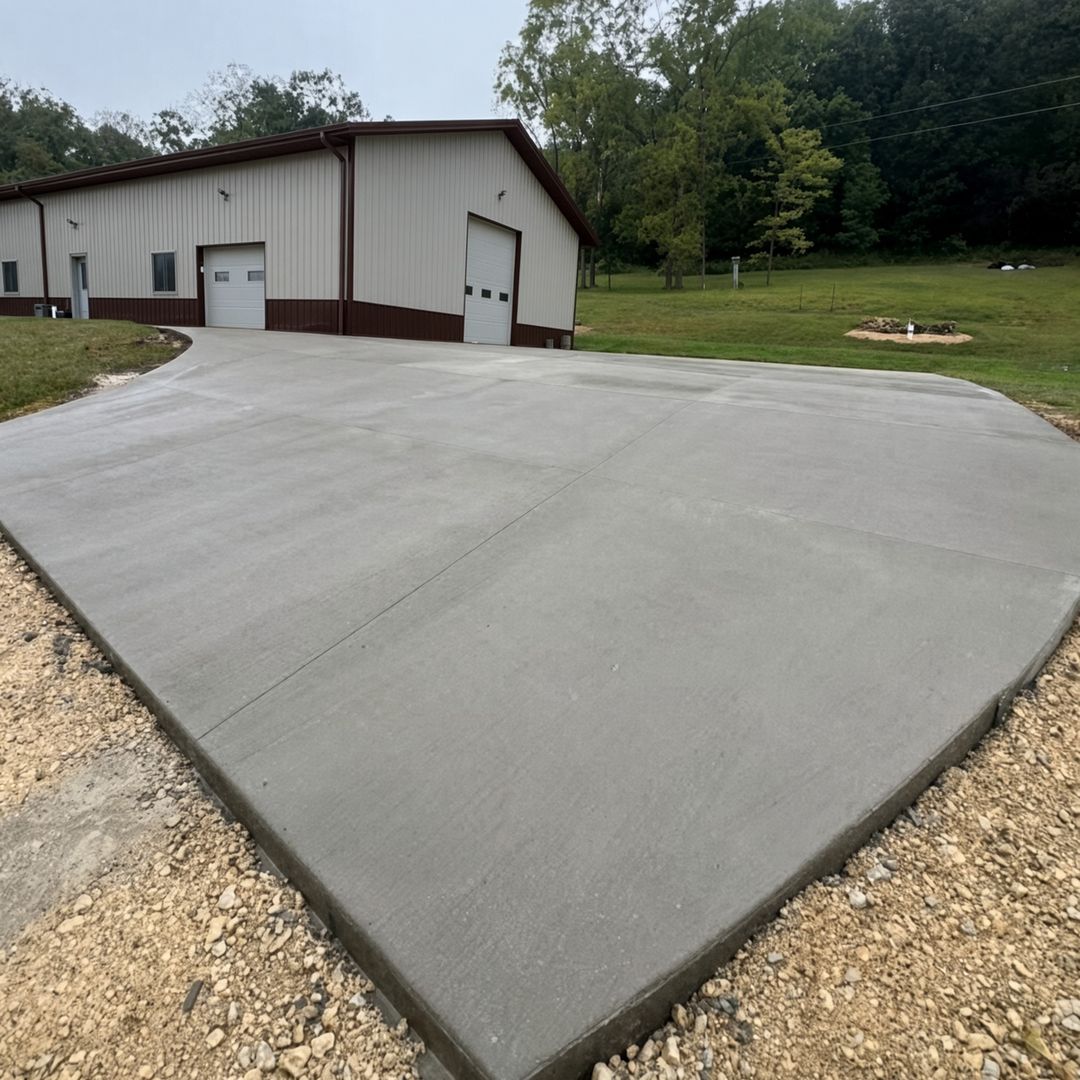
An overlay adds wear surface and no real strength. The slab still carries the car, so a driveway that flexes over a soft base will flex under its new top too. Turning tires scrub the surface most where a car swings in, and overlays depend on their bond to resist that.
Salt comes home on the car. As of 2026 the City of Eau Claire salts only its Ice Control Routes, but vehicles carry salt and brine in from those routes, so a driveway on a sanded side street still sees it. It drips off where you park, so the last few feet before the garage can get the most of it. An overlay’s bond gets the same salt water there.
Check three spots closely before resurfacing a driveway: the joint at the garage, the joint at the walk, and the apron at the street.
An apron with a settled edge or a crumbled lip at the street has failed the slab test and is no candidate for an overlay. If a job stops short of the apron, ask how the new surface will end at that line. If the driveway has failed in panels, a new driveway over a rebuilt base may be the better comparison.
Driveway Resurfacing Cost
The figures here are national published ranges. No verified Eau Claire or Wisconsin price data exists for concrete resurfacing. Concrete Network’s driveway cost guide, updated January 13, 2026, puts driveway resurfacing at $3 to $10 per square foot. Bob Vila’s concrete resurfacing cost guide, updated December 21, 2023, gives $3 to $9 per square foot for a driveway, and says decorative overlays can run as much as $7 to $20. These are typical national figures, not a quote, and they are not our prices, because we do not resurface concrete.
The spread between the low and high end comes from the condition of the slab and the finish you pick.
- Prep
A clean, flat slab is the low end. Stripping old coatings, grinding and removing loose concrete add labor before any overlay goes down.
- Crack and joint work
Repairing cracks and carrying joints through to the new surface is separate work on top of the overlay itself.
- Finish
A plain gray broomed coat sits at the low end. Color, patterns and decorative work push a job toward the top.
- Size and access
Small jobs usually cost more per square foot, and a contractor may set a minimum.
- Upkeep afterward
Sealing and resealing are part of what an overlay costs over its life, so ask how often the product needs it.
Resurfacing or Replacement: When Each Is Worth It
A low price per square foot is only a bargain if the overlay stays down. Concrete Network says a quality product, professionally installed, can last 10 years or more, and Bob Vila’s guide says 8 to 15 years. Neither figure is Wisconsin data. Both assume a sound slab and good prep.
Resurfacing is worth it when the slab is flat, the concrete below the worn top is solid and the water runs away. If you like where the slab sits and only hate how it looks, an overlay is a fair buy, and we will say so. It also makes sense on a slab with a decade of service left that you do not want to pay to tear out.
It stops being worth it in these cases:
- The slab moved. Heave or settlement comes from below, and an overlay reaches none of it.
- The base failed or washed out. Only taking the concrete out lets anyone dig out soft ground and rebuild it.
- The drainage is wrong. A patio that pitches toward the house needs a new slope, and an overlay follows the old one. See tearing out a patio that drains the wrong way.
- Scaling is heavy and still spreading. It may not be feasible to repair, and an overlay over failing concrete has nothing sound to hold.
- It has failed once already. A second overlay on the same slab inherits whatever made the first one let go, and the old layer has to come off first.
Replacement does not always mean the whole slab. Failed panels can often be cut out at the joints, and that may leave the rest of the slab sound enough to keep. Short walk panels are easy to replace one at a time, and private walks and City sidewalk rules cover who answers for which. New panels will not match old ones, which is the one thing an overlay does better than a section repair: it gives a whole slab one color.
Worn Slab or Failed Slab: A Straight Answer
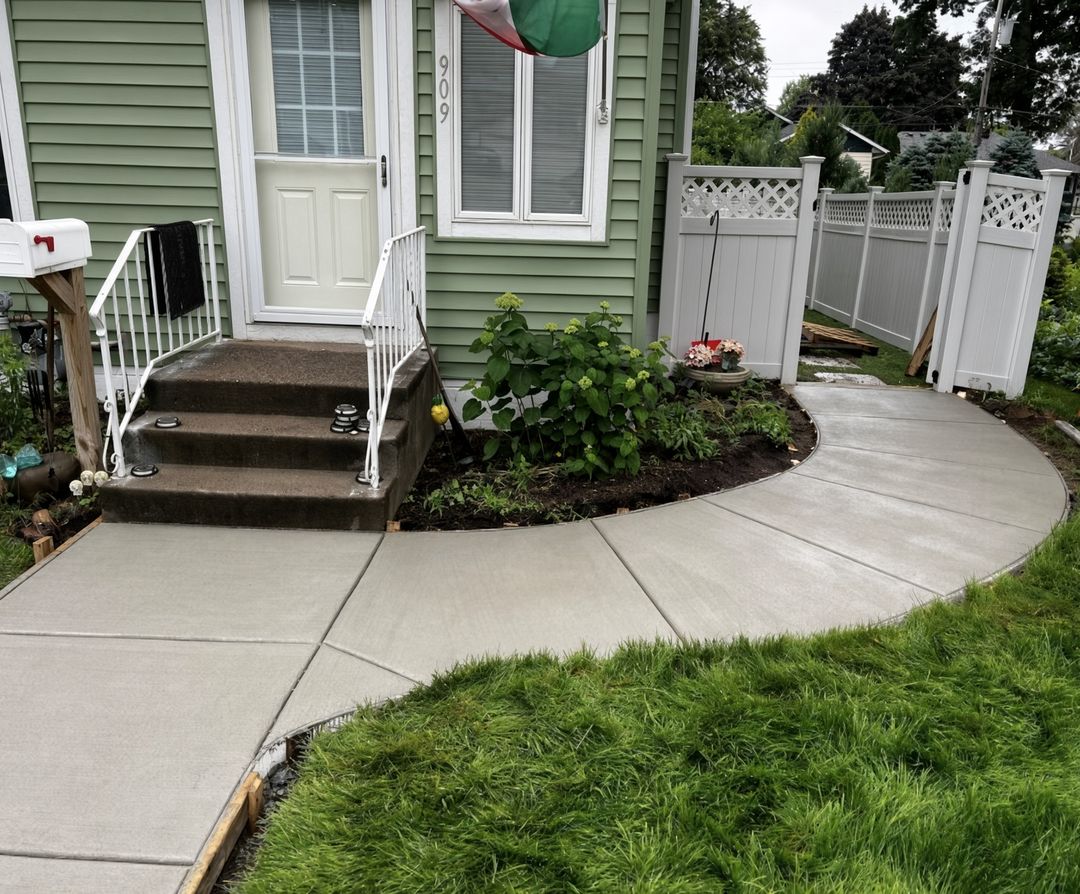
If your slab is flat and sound with a tired top, it may be a resurfacing candidate, and we will say so on the phone, even though that job goes to someone else. If it moved, lost its base or drains the wrong way, the fix is new concrete, and that is what we do.
Tell us what the slab test turned up, then send a few photos of the worn surface. We are a concrete contractor that tears out and replaces failed slabs, working in Eau Claire, Altoona, Chippewa Falls and nearby Chippewa Valley towns.