
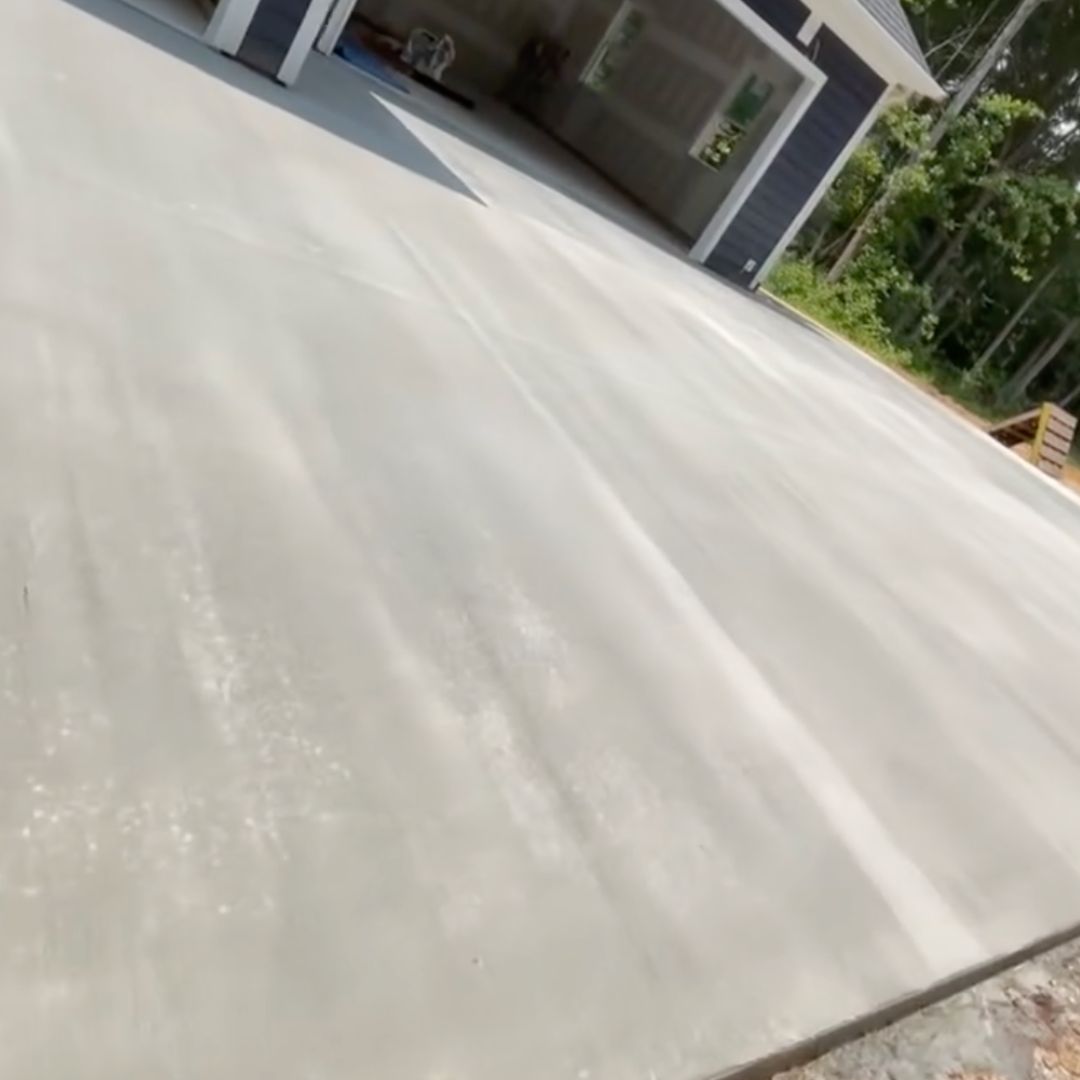
Garage Floor Repair Options in Eau Claire, Problem by Problem
Garage floor repair covers four different jobs, done by four different kinds of company. Matching the problem to the right one saves money, so start with what the floor is doing.
| What you see | What it usually means | The usual repair | Who does it |
|---|---|---|---|
| Hairline cracks that sit flat | Shrinkage. All concrete tends to crack, and these are mostly cosmetic. | Leave them, or fill them to keep water and salt out. | A homeowner or a handyman. |
| Light flaking or pitting at the surface | Scaling from freezing, thawing and road salt. | Often nothing. A resurfacer or a coating can work when the concrete under it is sound. | A resurfacing or coating company. |
| A floor that has sunk but is still in one piece | The ground under it has settled. | Lifting, with grout or foam pumped under the slab. | A concrete leveling company. |
| A crack with one side higher, a hump, or loose pieces | The slab has moved or broken, usually with water or frost at work under it. | Cut out the damaged section or the whole floor, rebuild the base and pour new concrete. | We do. |
| Scaling across most of the floor, or a crumbled strip at the door | The surface concrete has failed. | Replacement. Heavy scaling that keeps spreading may not be feasible to repair. | We do. |
Garage Floor Crack Repair: Which Cracks Matter
Most garage floors have cracks, and most of those cracks are harmless. Concrete shrinks as it cures, and a thin crack that lies flat on both sides is the slab relieving that stress. Do not mistake the straight lines cut into the floor for cracks either. Those are control joints, put there on purpose so the cracking happens in them.
The cracks worth worrying about have changed the shape of the floor. One side sits higher than the other, the crack has opened past about a quarter inch, or the pieces move under a tire. Any of those means the slab has moved.
Garage floor crack repair with a filler is worth doing on a sound floor, because it keeps the salty meltwater that drips off the car out of the crack. It cannot pull a slab back into place. We do not fill cracks, so for a floor that only needs sealing, a tube of crack filler or a handyman is the right call, and our general guide to crack fillers covers which type suits which crack.
Garage Floor Resurfacing and Patching: When a Repair Holds
A patch or a thin resurfacing layer bonds to the concrete under it, so it is only as good as that concrete. Cement industry guidance puts it this way: a damaged spot can be patched when the damage stays in the top third of the slab and the concrete below is sound. Go deeper than that and the repair has to go the full depth.
Resurfacing follows the same rule: over sound concrete it can renew a worn or lightly scaled surface, and it is no fix for a garage floor that is heaving, badly cracked or broken down by freezing and thawing. Our general guide to how overlays bond and fail covers the rest. Patches also show, because repair material does not match old concrete in color.
A floor coating is a finish, and it belongs in the same list. It goes over a sound slab. It does not hold a moving one together.
Sunken Garage Floor Repair: Leveling and Lifting
A garage floor that has dropped along a wall or at the door, but is still one solid piece, is a candidate for lifting, with cement grout or polyurethane foam pumped under the slab. That is the work of a concrete leveling company, not ours, and the two methods are compared in our mudjacking and concrete lifting guide.
Lifting suits a slab that settled because the ground under it gave way and has stopped moving. It does not suit a floor that is cracked into loose pieces, humped in the middle or flaking apart, because the concrete itself is the problem there. Ask the leveling company what caused the floor to sink. If the answer is water running under the slab, that has to be dealt with too, or the floor will keep moving.
When Concrete Garage Floor Repair Means Replacement
Some floors are past patching and lifting. The slab has heaved, broken into pieces that rock, or scaled across most of its surface. For those, the repair is new concrete, and that is the work we take on.
If the damage is in one area, such as the strip at the door or one cracked bay, we saw-cut around it, break out that section and pour it new. If it runs through the floor, the whole slab comes out. Either way the ground is open while we work, so soft or washed-out base gets dug out and rebuilt before the new concrete goes in. That is the part no patch can reach.
How the job runs, the rules for attached and detached garages and typical prices are on our page for garage floor replacement and new garage floors. For a driveway, walk or patio outside the garage, the same patch-or-replace reasoning is laid out in our guide to concrete repair in Eau Claire.
Getting a Garage Floor Repair Estimate
A few photos tell us most of what we need. Take one of the whole floor from the door, one of the worst crack with something beside it for scale, and one of anywhere water sits. Note whether the garage is attached to the house and whether the floor has dropped along the walls.
If it looks like a job for a filler, a coating or a leveling crew, we will say so on the call. If it needs new concrete, we come out, measure and put the scope and the price in writing. We are an Eau Claire concrete contractor that replaces garage floors, in Eau Claire, Altoona, Chippewa Falls and the towns nearby.